Coffee Knowledge
How Much Caffeine Is in Coffee?

How much caffeine is really in your cup?
Almost everyone drinks it, hardly anyone knows how much of it is in there. Caffeine is the reason most people reach for the pot in the morning at all, but the amount in your cup varies more than you would think. It depends on the bean, on the brewing method and even on whether you dose by weight or by volume. Here is what actually matters, without the myths.
Espresso or filter coffee: which has more?
The most common mix-up of all. An espresso tastes intense, so surely it must have more caffeine? Not quite. A classic 30 millilitre espresso contains around 63 milligrams of caffeine. A normal cup of filter coffee of about 240 millilitres comes to roughly 95 milligrams. So per sip the espresso is far more concentrated, around 2.1 milligrams per millilitre versus 0.4 for filter. But because the filter cup is much larger, it holds more caffeine in total. If you simply want to wake up, a large cup of filter coffee often does the job better than a small espresso.
Arabica or Robusta: the bean decides
The biggest lever sits in the bean itself. Arabica contains about 1.2 to 1.5 percent caffeine by dry weight. Robusta sits at 2.2 to 2.7 percent, almost twice as much. The reason is biology: caffeine is a natural insecticide for the plant, and Robusta grows at lower altitudes where more pests lurk. If you want a cup with a real punch, you will find it in blends with a Robusta share. Specialty coffee, on the other hand, almost always relies on Arabica, for the flavour. More on the difference is in our piece on Arabica and Robusta.
Does the roast make a difference?
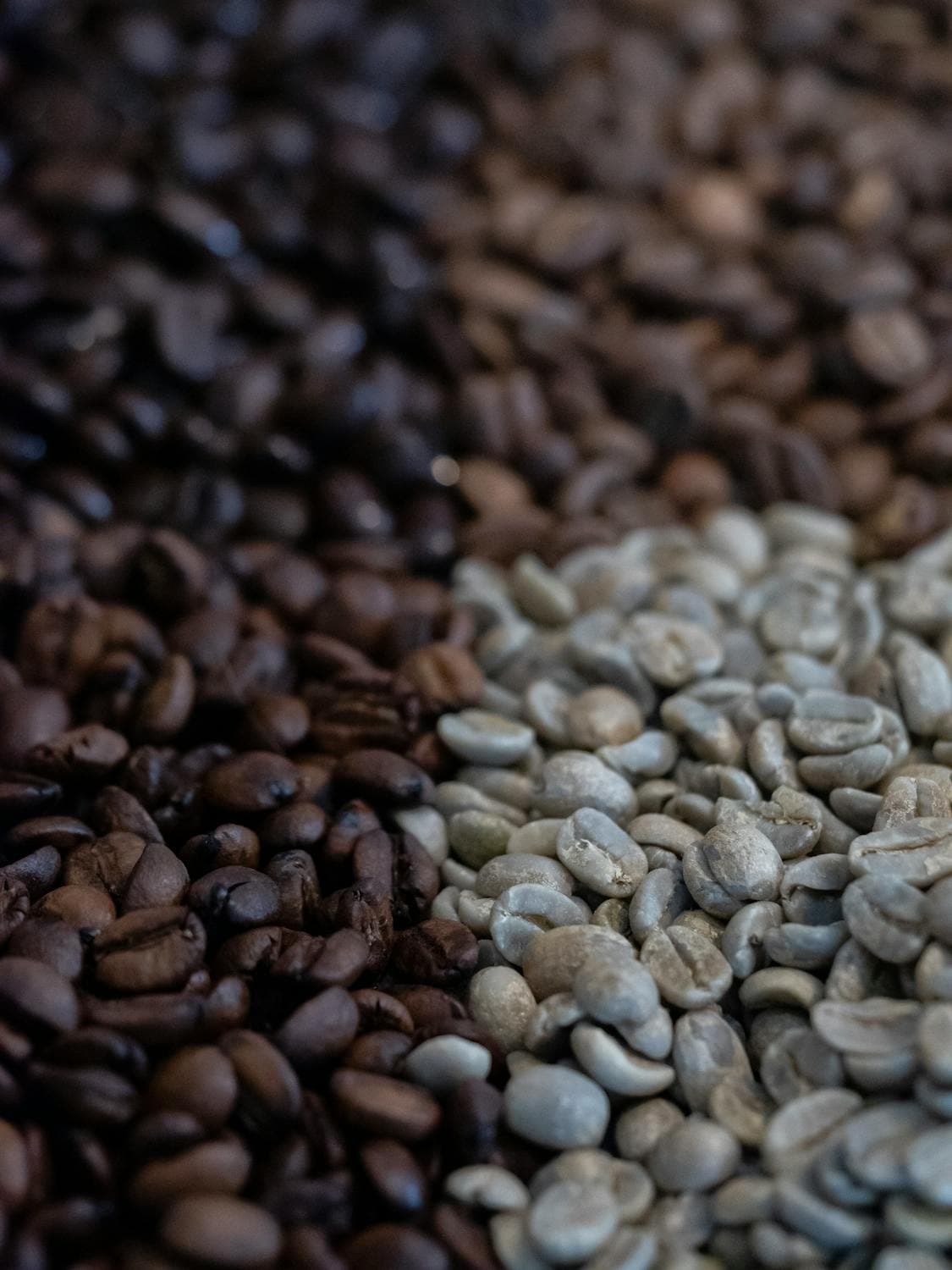
A stubborn myth lives here: dark roast means more caffeine. It does not. Caffeine is heat stable and survives roasting almost unchanged. What changes is the weight and volume of the bean. Dark beans lose more water during roasting and become larger and lighter. If you dose by volume, that is with a scoop, more light beans fit in and you get marginally more caffeine. If you dose by weight, that is with a scale, you need more dark beans for the same grams and the cup has marginally more. In the end the difference is a few percent and barely noticeable in everyday life. More on roast levels here.
What else determines the amount
After the bean comes the brewing. The more coffee you dose, the more caffeine ends up in the cup, that is the most direct factor. Alongside it, grind size, water temperature and contact time all play a part. Hot water dissolves caffeine faster than cold, and the longer water and coffee stay in contact, the more is drawn out. How exactly this works is explained in our piece on extraction. Cold brew is a good example: the concentrate is made with a lot of coffee and a steeping time of many hours, which is why it is strong. But diluted as usual with water or ice, you end up back at roughly normal coffee.
How much is too much?
The European Food Safety Authority (EFSA) has clear numbers on this. For healthy adults, up to 400 milligrams of caffeine per day are considered safe, which is roughly four to five cups of filter coffee. A single dose of up to 200 milligrams, about two and a half espressos, is also no problem. Pregnant women should stay at a maximum of 200 milligrams per day. And if you sleep badly in the evening: even 100 milligrams can lengthen the time it takes to fall asleep when consumed shortly before bed. What else coffee does to the body we gathered in our piece Is coffee healthy?.
Less caffeine, full flavour
If you want to avoid caffeine entirely, you do not have to give up good coffee. Decaffeinated specialty coffee is genuinely good these days, more on that in our piece on decaffeinated coffee. And honestly: with specialty coffee it is less about the kick anyway and more about what happens in the cup. Bergamot, apricot, dark chocolate, you taste that regardless of how much caffeine is in there. You will find freshly roasted beans from small Swiss roasteries on our marketplace, and if you want to discover something new on a regular basis, there is our subscription.