Coffee Knowledge
Decaf Coffee: How It Is Actually Made
Decaf Coffee: How It Is Actually Made
Decaf has a bad réputation. For too long, decaffeinated coffee was synonymous with the flat, dull hotel-breakfast brew that tasted like burnt cardboard. That simply is not true anymore. Modern decaffeination processes have become so good that you can find specialty decafs rated 85 points or higher by Q-graders. If you love coffee but cannot sleep after your third cappuccino, or if you just want to enjoy another cup in peace in the evening, it is worth understanding what actually happens inside a cup of decaf.
A Short History, A Long Story
The story of decaf starts in Bremen in 1903. The German coffee merchant Ludwig Roselius had a shipment of green coffee that had been soaked with seawater on its voyage and had kept its flavor but lost most of its caffeine. From this accident, he and his team developed the first commercially usable decaffeination process and founded the company Kaffee HAG. The original Roselius method used salt water and benzene as a solvent, which of course would not be acceptable today. But the basic idea still applies: you soak green coffee until the caffeine can be extracted while keeping as much flavor as possible inside the bean.
What Decaf Legally Means
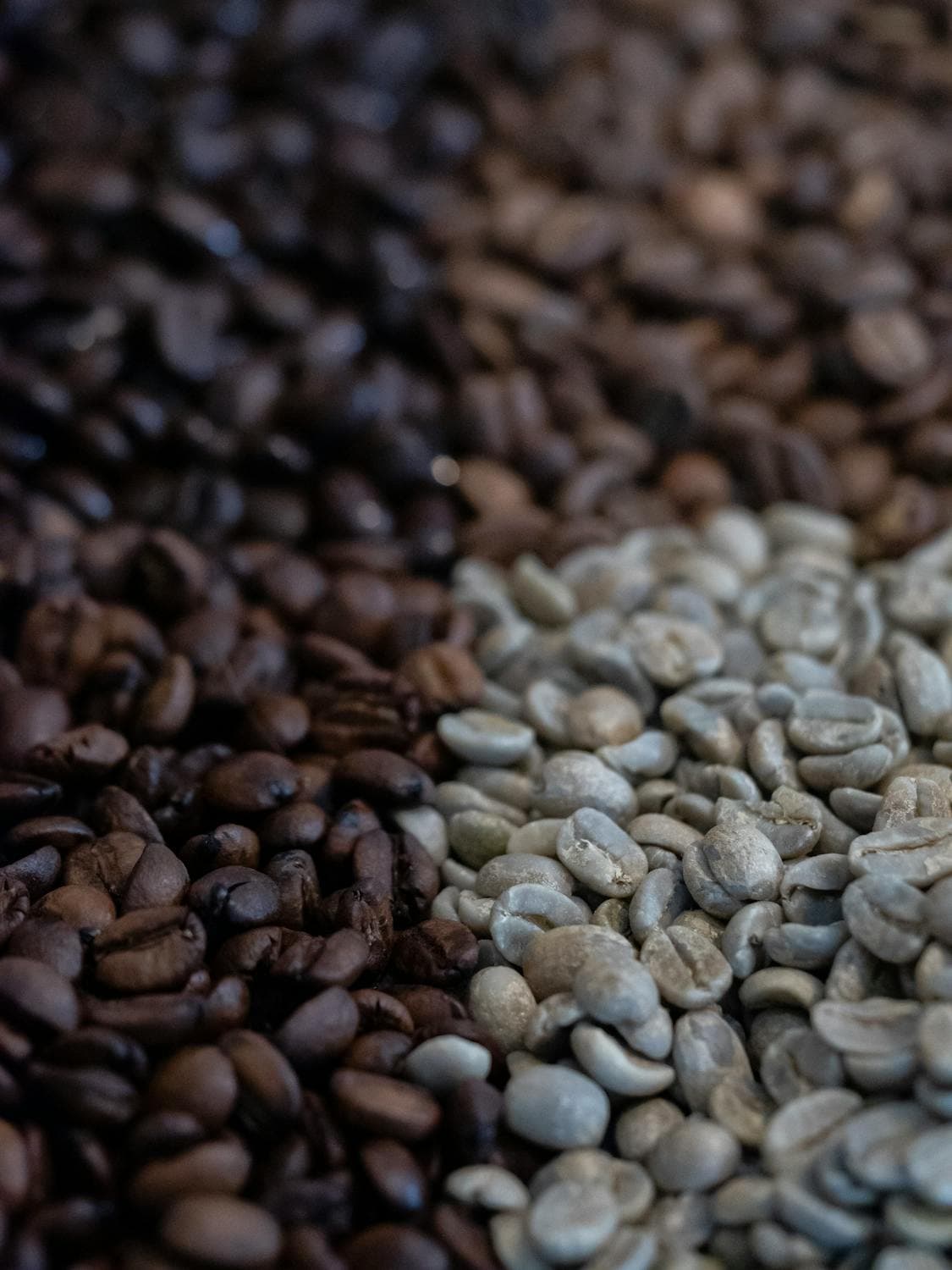
For a coffee to be labeled decaffeinated in Europe, at least 99.9 percent of the original caffeine must be removed. In the US, 97 percent is enough. A cup of decaf still contains about two to five milligrams of caffeine, compared to eighty to one hundred twenty milligrams in a regular cup of filter coffee. For most people that is too little to stay awake on. Important to know: decaffeination always happens before roasting, on the green bean. No roaster in the world strips caffeine out of already-roasted coffee.
Method One: Swiss Water Process
The Swiss Water Process is the only method that works entirely without chemical solvents. It was developed in Switzerland in the 1930s and commercialized in Canada in 1980. The idea is elegant. You take a first batch of green coffee and soak it in hot water until caffeine and flavor compounds dissolve out of the bean. Then you filter the caffeine out of that water using an activated carbon filter. What remains is the so-called Green Coffee Extract: water saturated with all the flavor compounds of the bean, but with no more caffeine. When you place a new batch of coffee in this water, caffeine can diffuse out of the bean, but flavors cannot, because the water is already saturated with them. After about ten hours, the new batch is 99.9 percent caffeine free and has kept most of its taste.
Method Two: CO2 Process
The CO2 process was developed in Germany in the 1970s and uses carbon dioxide in its supercritical state. Supercritical means that under high pressure and at certain temperatures, CO2 simultaneously has the properties of a liquid and a gas. In this state, it is a highly selective solvent that specifically extracts caffeine from the bean and largely leaves the bigger flavor molecules alone. After decaffeination, the pressure is reduced, the CO2 evaporates, and what remains are beans that have kept almost all of their original flavor notes. The process is expensive because it requires elaborate high-pressure equipment, but roasters consider it one of the best for preserving taste.
Method Three: Sugar Cane or EA Process
The EA process is often labeled Sugar Cane Decaf and is especially common in Colombia, where it is applied directly in the coffee growing regions. The beans are opened with steam and then bathed in a solution of water and ethyl acétate. That sounds like a chemistry lab, but ethyl acétate is a natural compound found, for example, in ripe bananas and in fermented sugar cane. The molecule bonds specifically to caffeine and pulls it out of the bean. Afterwards the coffee is washed, steamed, and dried. For Colombia, this method is practical because sugar cane is grown in large quantities anyway and ethyl acétate can be produced right on site. Many specialty decafs from Colombia use this process.
Method Four: Methylene Chloride or MC
The oldest solvent-based process still in use today employs methylene chloride, also called dichloromethane. It is cheap, effective, and extracts very little flavor from the bean. Methylene chloride evaporates at around 40 degrees and is no longer detectable after roasting at over 200 degrees. In the EU, its use is tightly regulated and residues stay well below any health threshold of concern. In the US, there has been longer debate around the method. Flavor-wise, MC decaf is often surprisingly good, but many specialty roasters avoid it anyway, because labels like Sugar Cane or Swiss Water simply sound cleaner.
What Good Decaf Tastes Like
A properly made decaf today can really be excellent. It brings notes of chocolate, nut, caramel, or even lighter fruit profiles, depending on origin and roast level. What you will notice when you step from years of office filter coffee into a specialty decaf: the body is usually a touch denser, the acidity a bit softer, and the fruity high notes slightly muted compared to the original. But we are talking about subtleties here, not good versus bad. An 86-point decaf from Colombia tastes better than any fully caffeinated supermarket espresso.
When Decaf Makes Sense
The classic answer: evenings. But decaf is more than a last resort for late-night coffee drinkers. Many people simply do not tolerate caffeine well, get palpitations or stomach issues from it. Others reduce it consciously because they want to improve their sleep quality or are breastfeeding. And there is the variant we particularly love: drink your second or third coffee of the day as decaf, to keep the taste and the ritual without staring at the ceiling at two in the morning. We have noticed more than once that people who try decaf in specialty quality for the first time are almost surprised they enjoy it.
At Röstpost
Specialty decaf is a growing category on our marketplace. Several of our Swiss roasteries carry permanent decaf positions, many of them Sugar Cane or Swiss Water Process. If you wrote off decaf long ago and want to reconsider, that might be a good excuse to order one and see what happens.