Brewing
Ristretto: The Short, Concentrated Sibling of Espresso
Ristretto: The Short, Concentrated Sibling of Espresso
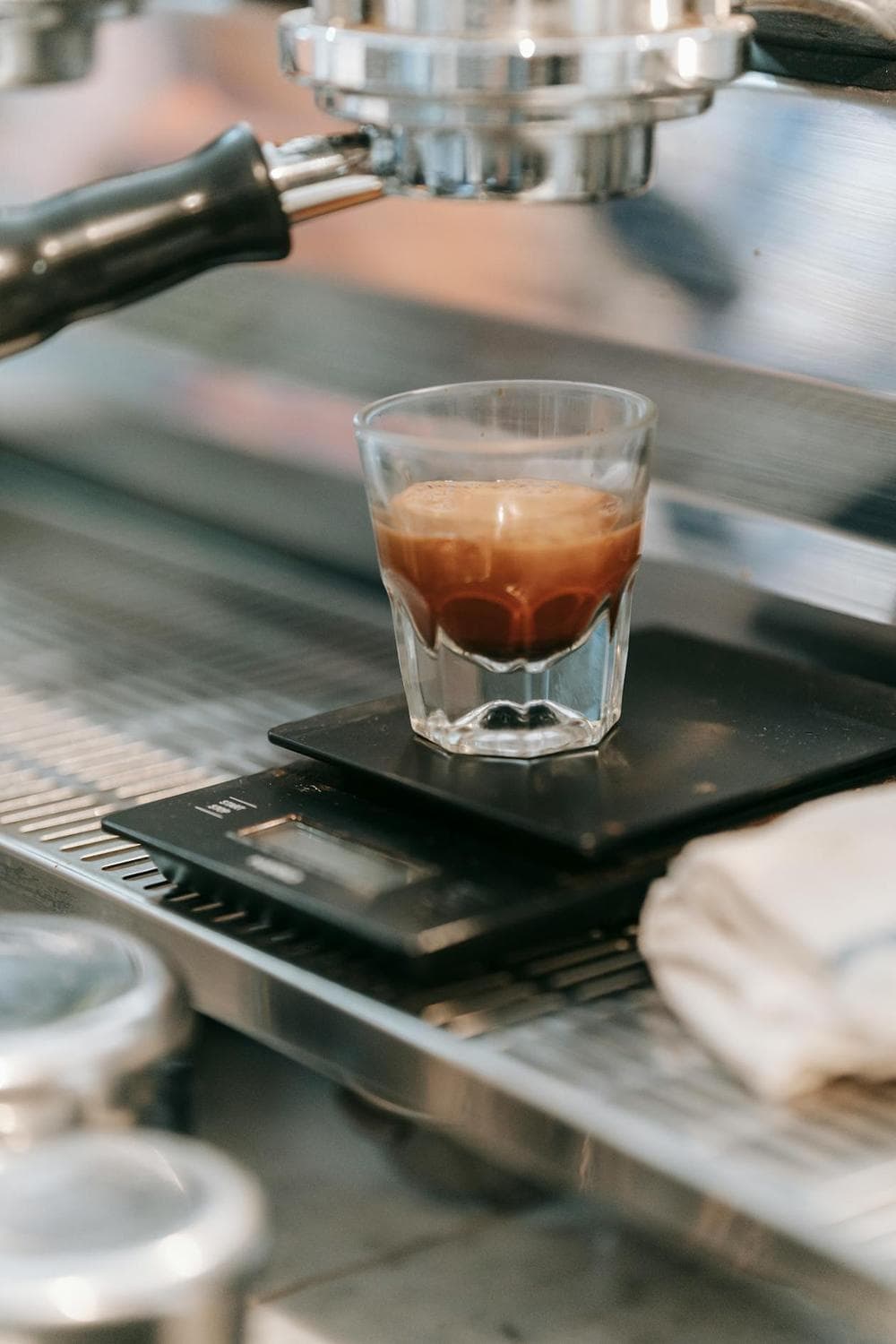
You order an espresso at an Italian bar, the barista nods, turns around, pulls the lever, and after about fifteen seconds places a tiny cup in front of you. Half full, dark, syrupy. If you are in Italy, that is often a ristretto. The name gives it away: ristretto means restricted, narrowed, kept short in Italian. That is exactly what it is. An espresso pulled deliberately shorter.
What makes a ristretto
The difference to a regular espresso is not in the dose but in the water. A classic espresso usually runs at a brew ratio of around 1:2. You take eighteen grams of ground coffee and pull about thirty-six grams of beverage. With a ristretto you stop earlier. The ratio sits around 1:1 to 1:1.5, so eighteen grams in, eighteen to twenty-seven grams out. Extraction time is shorter at roughly fifteen to twenty seconds, sometimes a slightly finer grind helps along the way.
What you get in the cup is a concentrated, dense drink. Less volume, more syrup. The crema sits dark and stable on top.
Why it tastes sweeter
Espresso extraction happens in phases. The sweet, fruity compounds dissolve first, then the balanced middle, finally the bitter end. If you stop the shot earlier, you mostly capture the front, sweeter part and leave the bitter notes behind. That is why a ristretto often hits the tongue rounder, sweeter and more concentrated than an espresso from the same beans, even though it has only half the volume.
That does not mean less water automatically equals better coffee. If the grind is too coarse or the beans do not suit it, a ristretto stays sour and unfinished. It is a style choice, not a guarantee of quality.
A short history
The ristretto comes from Italy, from the first decades of the espresso machine. When the early pressure machines arrived in Italian bars in the early twentieth century, the typical shot tended to be short and concentrated. What we now call a ristretto was simply an espresso at many counters. Over time the cups grew bigger, the volumes longer, and the deliberately short shot got its own name.
In the modern specialty world it was largely David Schomer of Espresso Vivace in Seattle who made it popular in the early nineties. His double ristretto became the house standard there and shaped a whole generation of baristas in the US and later worldwide.
Ristretto, espresso, lungo: the trio
Three siblings sharing the same coffee bed but with different amounts of water. Ristretto is the shortest, ratio around 1:1. Espresso normale sits at 1:2. Lungo runs to 1:3, sometimes longer. The longer the shot, the more volume, more bitterness, more water in the mouth. Which one tastes best is personal. Many modern specialty bars in Switzerland work somewhere between 1:2 and 1:2.5, because lighter roasts hit their sweet spot in that range.
Pulling one at home
On a regular espresso machine with a portafilter, a ristretto is no rocket science. You need a good scale and a bit of patience.
Weigh your dose, for example eighteen grams into the double basket. Grind a touch finer than your standard espresso. Tamp evenly. Put the cup on the scale under the machine and tare. Start the shot and stop it at around eighteen to twenty-two grams of liquid, so roughly 1:1 to 1:1.2. Time usually lands between fifteen and twenty-two seconds depending on machine and grind.
If the shot rushes through in under twelve seconds, grind finer. If it drags past thirty seconds, grind coarser. Lighter roasts often want a bit more water, darker ones a bit less.
When a ristretto makes sense
As a solo drink, the ristretto is for people who like concentration. Chocolate, caramel, baked fruit, dense sweetness. Anyone used to fruity, light filter coffees may find it a bit too compact.
It works very well as a base for milk drinks. A cappuccino or flat white built on a ristretto carries a deeper, rounder coffee flavour because the concentration does not get diluted as much by the milk. That is exactly why many specialty bars reach for the ristretto when milk is involved.
At Röstpost
On the Röstpost marketplace you find espresso roasts from across Switzerland. Classic darker roasts from Ticino or the Mittelland tend to be a safe pick for ristretto because they are tuned for that syrupy concentration. If you want something more modern, try a light espresso roast with a fruity processing. Suddenly your ristretto turns berry or citrus-leaning. Both are right. Just a question of style.