Brewing
Latte Art: Where the Pattern in Your Cappuccino Comes From
Latte Art: Where the Pattern in Your Cappuccino Comes From
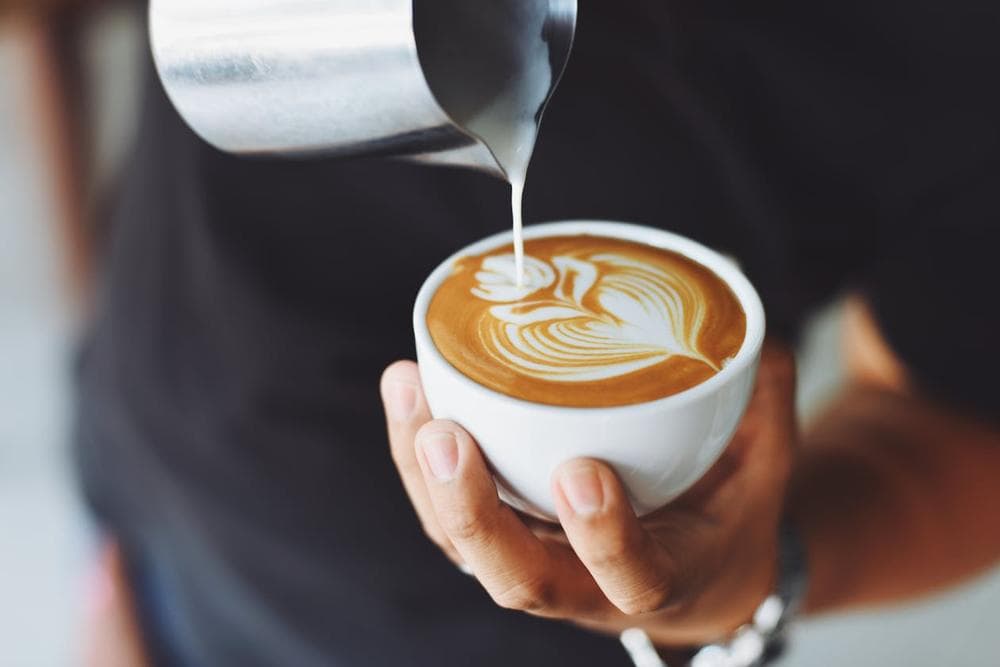
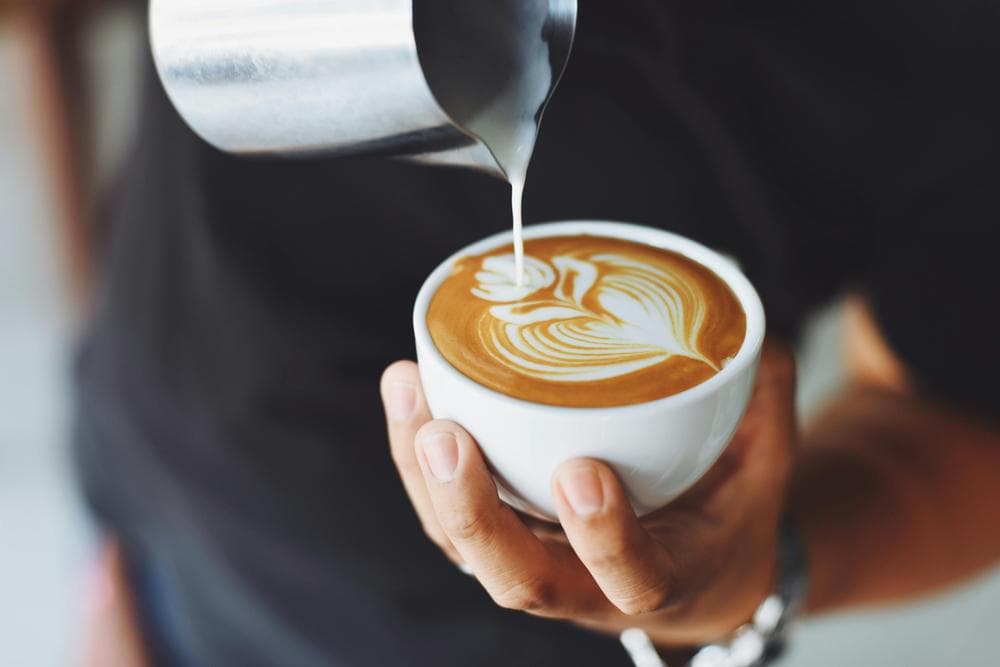
You order a cappuccino and there it is, a heart or a leaf floating on the foam. That's latte art. It looks pretty, but it's not just decoration. A clean pour means clean steaming. The picture in your cup is a receipt for the fact that both the milk and the espresso are dialed in.
A short history
Latte art as we know it today is surprisingly young. Most sources agree on Espresso Vivace in Seattle, founded in 1988 by David Schomer and Geneva Sullivan. Schomer started pouring patterns in the late eighties. His manager at the time was raised in northern Italy and told him he hadn't seen anything like it since his childhood in the hills above Turin. The pattern, his manager called it a rosetta.
By 1989 the heart was a fixture at the Vivace bar. The rosetta followed in 1992, after Schomer reverse-engineered the technique from a photograph he had seen at Cafe Mateki in Italy. In 1995 he released his teaching video Cafe Latte Art, which carried the method to the rest of the world. Italy invented the espresso, but modern latte art was made famous in Seattle.
The actual trick: microfoam
Without the right foam, no latte art. The thing you are after is called microfoam. That is milk with very fine air bubbles worked in so evenly that the surface looks like wet paint. No visible bubbles, no layers, no foam dome. Swirl the pitcher and the milk should move like liquid paint.
Target temperature is between 55 and 65 degrees Celsius. Below that the milk is flat and tastes of nothing. Above it, the whey proteins denature, the bubbles get big and unstable, and the milk starts tasting cooked. At around 60 to 65 the lactose also caramelises slightly, which is the source of that natural sweetness a good cappuccino has.
How the foam gets in there
On an espresso machine it happens in two phases. First you hold the steam wand just below the surface and let air in for two to five seconds. If you do it right you hear a soft hiss, almost like paper tearing. Then you push the wand deeper and let the milk spin in the pitcher. The spin breaks the big bubbles into thousands of tiny ones. White milk turns into silky foam.
Whole milk works most reliably, because the fat gives the foam stability. Plant alternatives work too, but usually need a bit of practice and a barista version with higher fat content, otherwise the foam falls apart faster.
The classics: heart, tulip, rosetta
There are only a handful of base patterns, the rest are variations. The heart is the entry. You pour from a bit of height, let the milk sink under the espresso, bring the pitcher closer, and the moment a white surface appears, you draw a straight line through it. Done.
The tulip is built by stamping a series of small white dots into the cup and connecting them with a final straight pour. Three dots is a good start, five or more is the professional version.
The rosetta is the leaf with the wavy edges. You start at the back of the cup and wiggle the pitcher side to side while pulling slowly toward the centre. The final straight line splits the leaf and gives it a stem. Sounds simple, isn't. Pros do it in their sleep, everyone else needs a few hundred attempts.
Free pour vs etching
In the specialty world basically only free pouring counts. Free pour means the picture is created purely by the movement of the pitcher and the behaviour of the foam. Etching, where you draw on the surface afterwards with a stick or sprinkle cocoa through a stencil, often looks cute but baristas tend to see it as a decoration trick. In competition, free pouring is mandatory.
Competitions and standards
The World Latte Art Championship has been held since 2005, organised through the Specialty Coffee Association and now the World Coffee Championships platform. On the main stage competitors pour six drinks in eleven minutes: two identical free-pour lattes and two designer patterns, each in matching pairs. Judges look at symmetry, contrast, detail and whether the two cups in a set actually look identical. This isn't a hobby, this is craft at Olympic level.
What it gives you at home
You don't need to become a champion to get the benefit. If your foam glistens and you can land a halfway straight heart, you also have a cappuccino with the right texture. Latte art is less an end in itself than a test. Looks bad, usually tastes flat. Looks good, the milk is either just right or you got lucky. Practice gets you control over both.
If you are starting out, work with a darker espresso roast. The crema gives more contrast, the picture is more visible. With light specialty roasts the foam often only looks clean once you basically already have the technique down.
At Röstpost
On the Röstpost marketplace you find espresso roasts from across Switzerland, from classic dark to modern light. If you want to practice latte art at home, the darker roasts will give you a smoother start. And once you nail a cup that looks like a competition pour, drink it before the foam collapses. That is the whole point.