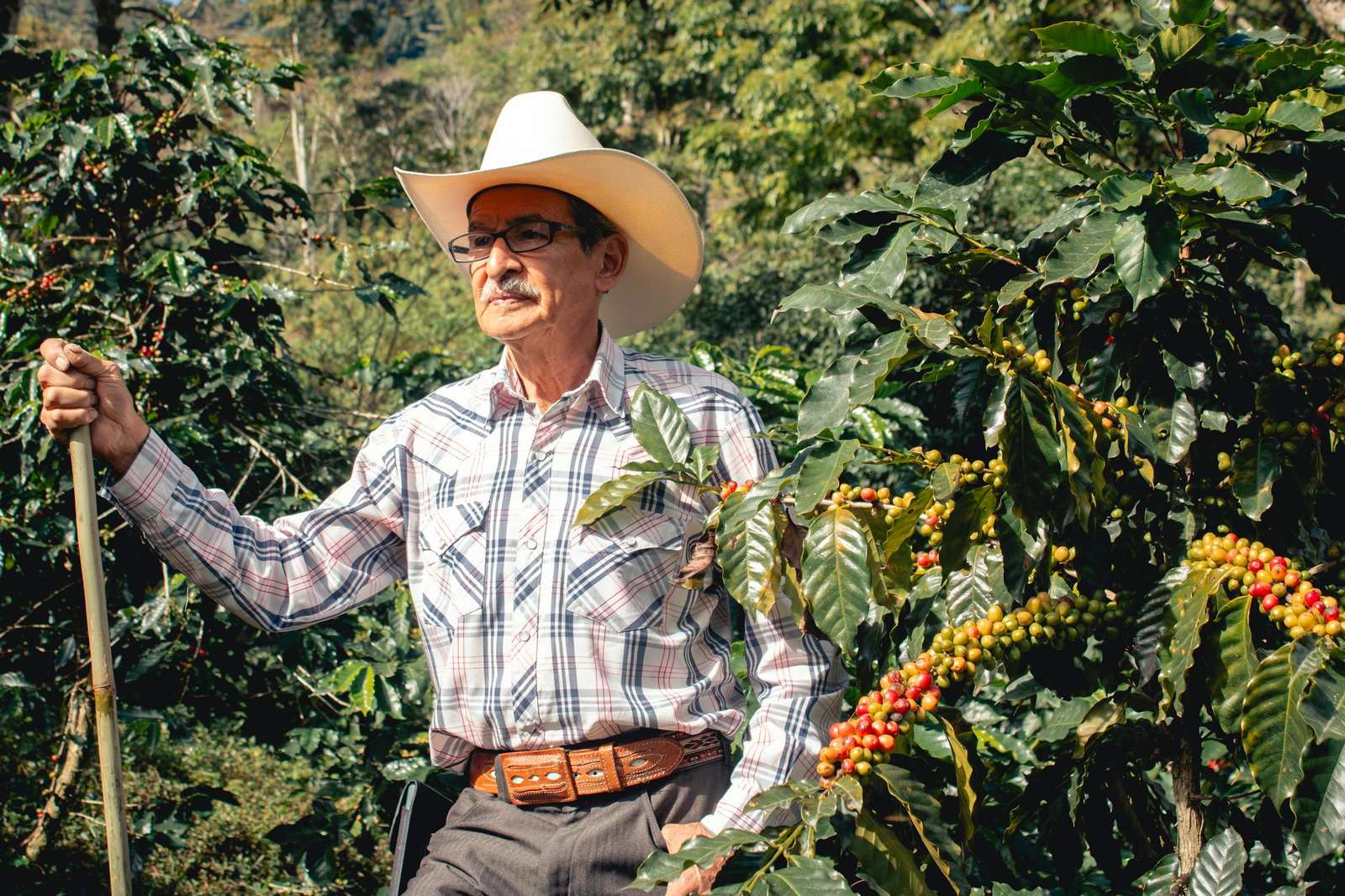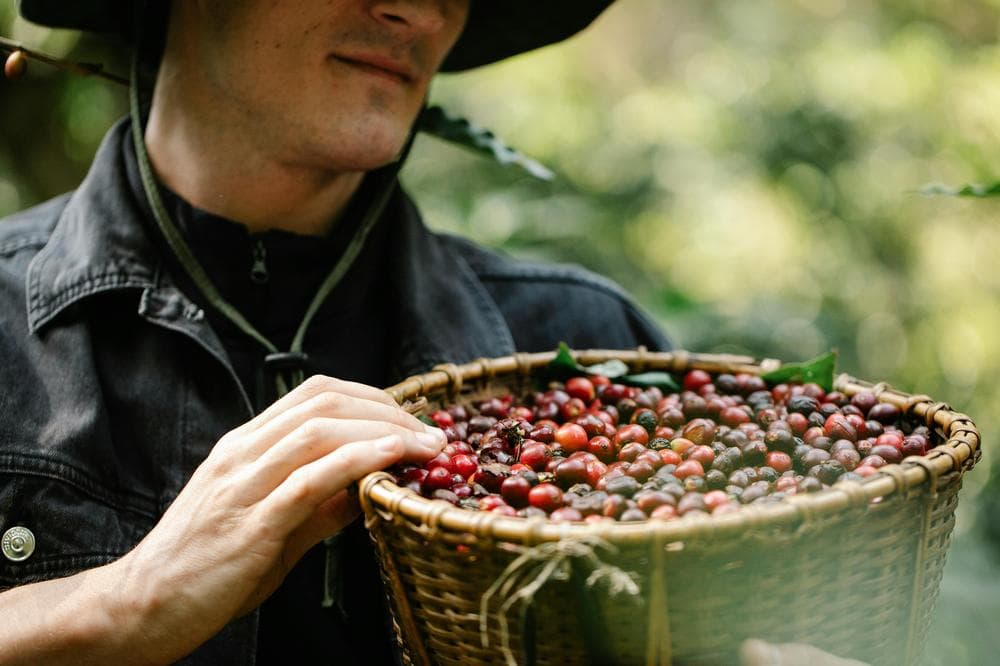
Sustainability
Climate Change and Coffee: What Happens to Your Cup by 2050

Climate change and coffee: an honest look
Anyone who likes specialty coffee can already taste the topic in the cup. Beans that were around last year are gone this year. Prices for good Arabica lots keep going up. And every few months there's another headline about a harvest in Brazil or Colombia coming in smaller than expected because of heat, frost or drought. Climate change is no longer an abstract future topic. It sits inside the supply chain, from the farm to the roastery. Here is an honest overview of what's happening, what's projected by 2050, and what the industry is doing about it.
Why coffee is so sensitive
Coffea arabica, the species behind around 60 percent of global production and almost every specialty coffee, is a fussy plant. It grows best at an annual average of 18 to 21 degrees Celsius. Above about 24 degrees things get critical, and from 30 degrees upward plants visibly suffer: stunted growth, yellow leaves, stem tumours, lower yield, less aroma. Coffea canephora, better known as Robusta, copes with more heat but usually has less complexity in the cup.
Then there's altitude. Specialty Arabica typically grows between 1200 and 2200 metres. Exactly where ripening is slow enough that acids, sugars and aromatic compounds can build up. As temperatures rise, this zone shifts upward. But mountains have a summit. At some point, high enough is high enough.
What's projected for 2050
Several major studies, including work by World Coffee Research and the Climate Institute, arrive at a similar picture. The area where Arabica can be grown today is expected to shrink by about half by 2050. That is not a worst case, that is the middle path.
Concrete numbers from the most important origins:
In Brazil, the largest coffee producer in the world, suitable Arabica land is projected to fall from 81 to 62 percent of today's area. In the main producing states of Minas Gerais and São Paulo, suitable land could drop from 70 to 75 percent down to 20 to 25 percent. In Colombia, unsuitable areas rise from 7 to 18 percent. In Honduras, suitable zones shrink from 53 to just 12 percent. Central America overall could lose between 38 and 89 percent of its coffee farmland.
At the same time, new areas open up, mostly in East Africa and at altitudes that are currently too cool. But it isn't a clean swap. Soils, infrastructure, experience and whole farming communities cannot simply be lifted 500 metres uphill.
Heat stress, drought, heavy rain
It's not only about average temperatures. What really hits farmers is extreme weather. Longer dry spells, then sudden downpours that tear the blossoms off the bushes. Late frosts in Brazil like the one in 2021 that wiped out whole plantations. Landslides on the steep slopes of Colombia. The plant wants reliability, and it gets the opposite.
Heat also speeds up cherry ripening. That might sound good at first, but it isn't. A cherry that ripens too fast stores less sugar and fewer aromatic compounds. Exactly the things that make a specialty cup interesting are the first to disappear.
Coffee leaf rust: the climbing fungus
Hemileia vastatrix, known in English as coffee leaf rust, is the most important fungal disease of the plant. It attacks the leaves, makes them drop off and weakens the bush so badly that yield and quality collapse. Coffee leaf rust alone causes losses of one to two billion US dollars per year.
The pathogen needs warmth and humidity. For a long time it was restricted to lower altitudes, since higher specialty zones were too cool for it. With climate change, it's moving up. Coffee leaf rust now appears regularly above 1700 metres, which was unthinkable twenty years ago. Arabica is particularly vulnerable, Robusta is naturally resistant. That is one reason why Robusta is likely to gain market share in the coming decades, even if cup quality takes a hit.
What the industry is doing
Giving up is not an option, and the specialty coffee industry has understood that. Three serious levers are being pulled:
First: climate-resilient varieties. World Coffee Research and national research institutes have been crossing Arabica with Robusta lines for years to bring heat and disease resistance into specialty-grade genetics. The Timor hybrid, a natural cross of Arabica and Robusta, is the base of many modern resistant varieties. It carries the rust-resistance SH genes SH6 through SH9. Castillo, Catimor, Sarchimor and newer lines like Centroamericano descend directly from it. Cup quality is not yet on Geisha level everywhere, but it's getting better. And without Robusta genetics, there's simply no way forward.
Second: farming practice. Shade growing, intercropping, soil cover, water management. All of it makes farms more resistant to extreme weather and cools the plants locally by one to two degrees. Exactly the buffer that often decides whether a plant survives a heat day or not.
Third: fair prices. When farmers have to deal with heat damage, pests and new varieties at the same time, they need capital and predictability. Direct trade and specialty structures that pay clearly above world market prices are built exactly for that. It isn't a charity bonus, it's risk insurance for the whole chain.
What you can do as a drinker
The honest answer: not everything, but something. Specialty coffee from roasteries that know their farmers personally and pay through direct trade at least partially flows back to the farm. Diversity in the cup helps too. Anyone who regularly drinks beans from different origins, varieties and processes supports diversity along the supply chain. A monoculture in your own cup encourages monocultures on the farm.
Demonising Robusta, by the way, isn't the solution either. Well-produced specialty Robusta exists, and it has its place in a warmer world. What matters is the quality, not the species itself.
At Röstpost
On our marketplace you find beans from Swiss roasteries that aren't competing on supermarket shelves. Many work directly with their farms, know the altitude, the variety and usually the name of the farmer. That doesn't fix climate change. But it sends a bigger share of the price to where it's needed. And the more we collectively invest in a resilient supply chain, the more likely it is that your favourite bean is still on your shelf in twenty years.