Sustainability
Coffee Leaf Rust: How a Fungus Reshaped the Coffee World

When the leaves turn orange
It starts quietly. On the underside of a coffee leaf, small yellowish spots appear. A few days later they turn powdery and orange, almost like rust on an old tool. Then the leaf falls. And the next one. And the next. Until a whole shrub stands bare and can no longer carry cherries.
This is coffee leaf rust. The fungus is called Hemileia vastatrix, and it is the most destructive disease coffee has ever seen. Anyone who drinks specialty coffee has felt its influence in the cup without realising it.
What Hemileia vastatrix actually is
Hemileia vastatrix is a rust fungus. It lives as a parasite on coffee plants, especially arabica. The spores are tiny, orange, and travel on wind, rain, or on people through clothing and tools. They land on the underside of a leaf, enter through the stomata, and begin to destroy the leaf tissue from within. Within two to three weeks, new spores form and spread again. A single infected leaf produces millions.
The plant itself rarely dies directly from the fungus. But it loses its leaves and with them the ability to photosynthesise. No leaves means no energy, no energy means no cherries. In a heavy outbreak, yields drop by up to 35 percent, sometimes more.
1869: Ceylon becomes a tea island
Coffee leaf rust had its first big appearance in 1869. At the time, Ceylon, today Sri Lanka, was one of the most important coffee regions in the world. The British colonial rulers had built large plantations there. In November 1869, the fungus was scientifically described in the Gardeners' Chronicle, based on samples sent from Sri Lanka. By then, it already had the island in its grip.
Within two decades, more than 90 percent of coffee production disappeared. Plantations were abandoned, went bankrupt, or were converted. Converted to what? Tea. James Taylor, a Scottish planter in the highlands of Kandy, had been experimenting with tea since the 1860s. Suddenly his idea was the only rescue. Ceylon tea exports to Britain rose from 282 pounds in 1875 to over 4.3 million pounds by 1885. By 1900, coffee in Sri Lanka was practically dead and tea had become the identity of the island. Anyone drinking a cup of Ceylon tea today is essentially drinking a fungus.
The long march around the globe
From Ceylon it kept moving. Between 1865 and 1985, coffee leaf rust travelled through every major coffee region on earth. India, Java, Sumatra, Africa, then Brazil in 1970, finally Central America. The spores are so light they can travel thousands of kilometres through the atmosphere. Once in a new place, they spread at a frightening speed.
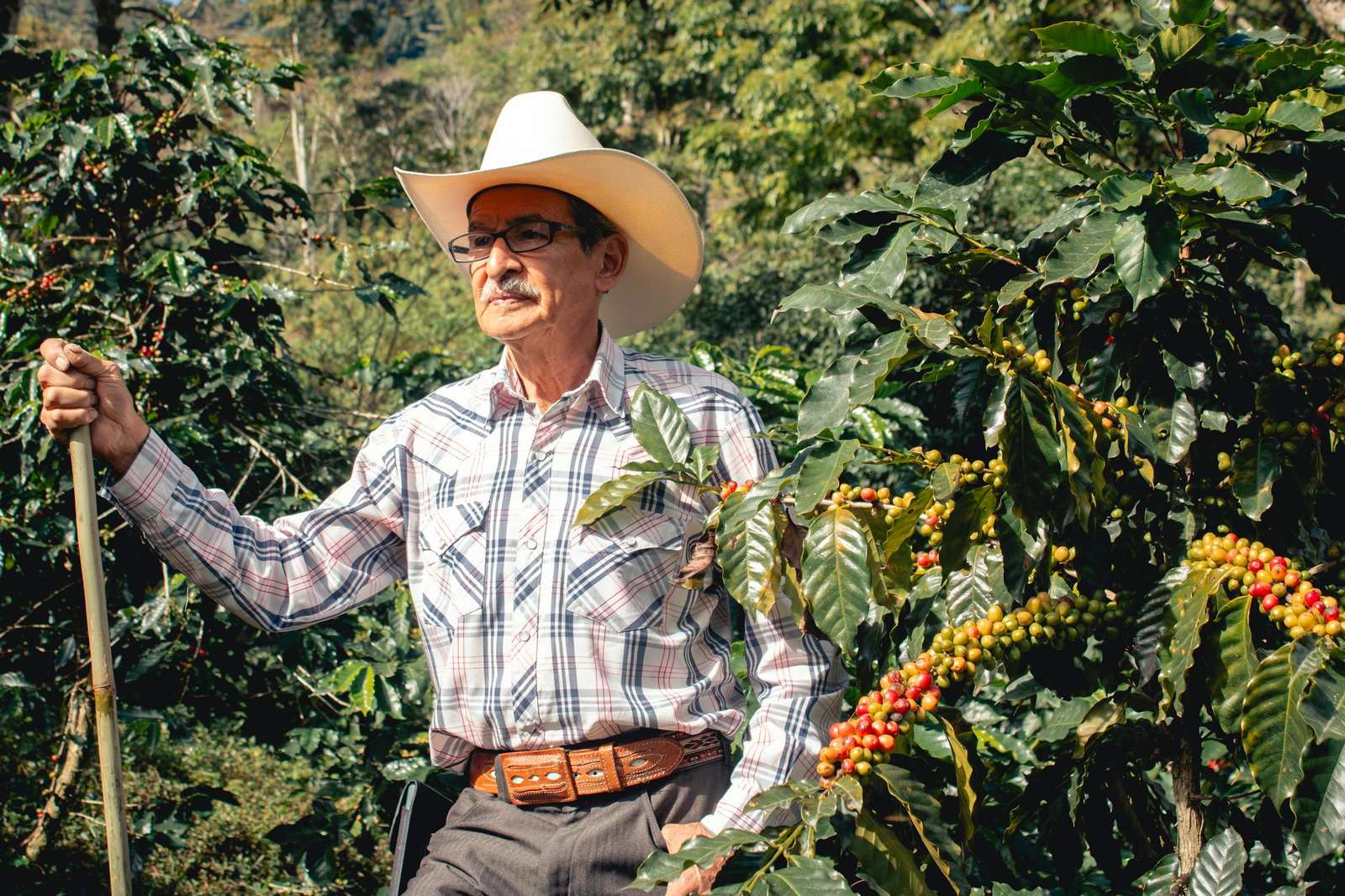
In 2012 a particularly fierce epidemic began in Central America. It ran until 2014 and destroyed up to 40 percent of the harvest in some countries. Over a million people lost their work. Honduras, Guatemala, El Salvador and Costa Rica were all hit hard. What made it so dramatic: the fungus suddenly appeared at altitudes where it had never been a problem before. Specialty farms at 1500 metres, supposedly too cool for the fungus, were infected overnight.
Climate change makes everything worse
Hemileia vastatrix likes it warm and damp. The optimum is roughly 21 to 25 degrees and high humidity. In the traditional growing zones between 1200 and 1800 metres above sea level, it used to be too cool for the fungus, especially at night. That is exactly what is changing.
Climate projections show that temperatures in coffee regions are rising, that rainy seasons are becoming unpredictable, and that dry spells are getting longer. All of that weakens the plants and gives the fungus new ground. What used to count as protected altitude is often the front line today. This combination of stressful climate and a more aggressive fungus is the genuinely new threat.
Robusta and the resistant varieties
Part of the answer lies in genetics. Robusta, arabica's coarser relative, is naturally far more resistant to coffee leaf rust. That is exactly why robusta spread out of its original area in the Congo from the early 20th century onwards. Brussels sent seeds to Indonesia because arabica was collapsing there. Today around 40 percent of the world coffee trade is robusta, and a large part of that is a direct consequence of the fungus.
Within arabica itself, resistant varieties have been bred over the last decades, mostly by crossing with robusta lines. Catimor, Castillo in Colombia, Sarchimor lines such as IAPAR 59 or Obata in Brazil, Lempira in Honduras. These hybrids are tough and productive. The problem: in specialty coffee, they had a poor reputation for a long time, because they did not match the flavour of classic varieties like Bourbon, Typica or Geisha. That has shifted. Castillo, for example, is now also bought by specialty roasters and often performs surprisingly well in cupping.
Worse is another observation: some varieties that counted as rust resistant are no longer. Lempira has been infected with rust in Honduras. Kent, K7 and others have also lost their resistance. The fungus mutates, and the varieties do not hold forever.
What farmers do about it
There are several strategies. Copper sprays are the classic method, but they burden soil and environment and are tricky in organic farming. Planting resistant varieties is the long term answer, but it takes time because coffee trees only start bearing after three or four years. Shade growing helps because it stabilises the microclimate and reduces stress. Targeted pruning, removing infected leaves and good farm hygiene also make a difference.
Biological control is being researched too. There are fungi that attack Hemileia vastatrix itself, for instance Lecanicillium lecanii. Early field trials show success, but the method is not yet established at scale. World Coffee Research is also working on new varieties that bring both flavour quality and resistance.
What this means for specialty coffee
Coffee leaf rust ends up in your cup in two ways. First, through price. When harvests fail, green coffee gets more expensive, and Swiss roasteries feel that too. In recent years the green coffee price has nearly doubled, and part of that goes back to crop losses in the major producing countries. Second, through variety. When farms have to switch to resistant hybrids, classic varieties disappear. Bourbon, Typica and old Geisha lines become rarer and more expensive. Anyone drinking a rare Panama Geisha is drinking a slice of plant history that we should no longer take for granted.
At the same time there is a positive trend. Specialty buyers work more closely with farms, pay better prices and support sustainable growing. If you buy specialty coffee instead of cheap industrial product, you finance that collaboration directly. That is not empty marketing, that is the bill at the end of the month for a farming family.
What you can do as a coffee drinker
Honestly, not much directly against the fungus. But something against the system that makes it so dangerous. Buying specialty coffee, ideally from small roasteries that work with farmers, helps producers earn better prices and invest in resilience. In Swiss specialty roasteries you often see where the bean comes from, sometimes even the farm name and the harvest year.
On our marketplace you'll find coffees from Swiss roasteries that work in direct trade partnerships and communicate openly about what they pay and who grew the bean. It's not the holy grail, but it's an honest start. And maybe on your next sip you'll spare a thought for the leaves that didn't turn orange.