Brewing
The Coffee Bloom: Why the First 30 Seconds Decide Everything
The Coffee Bloom: Why the First 30 Seconds Decide Everything
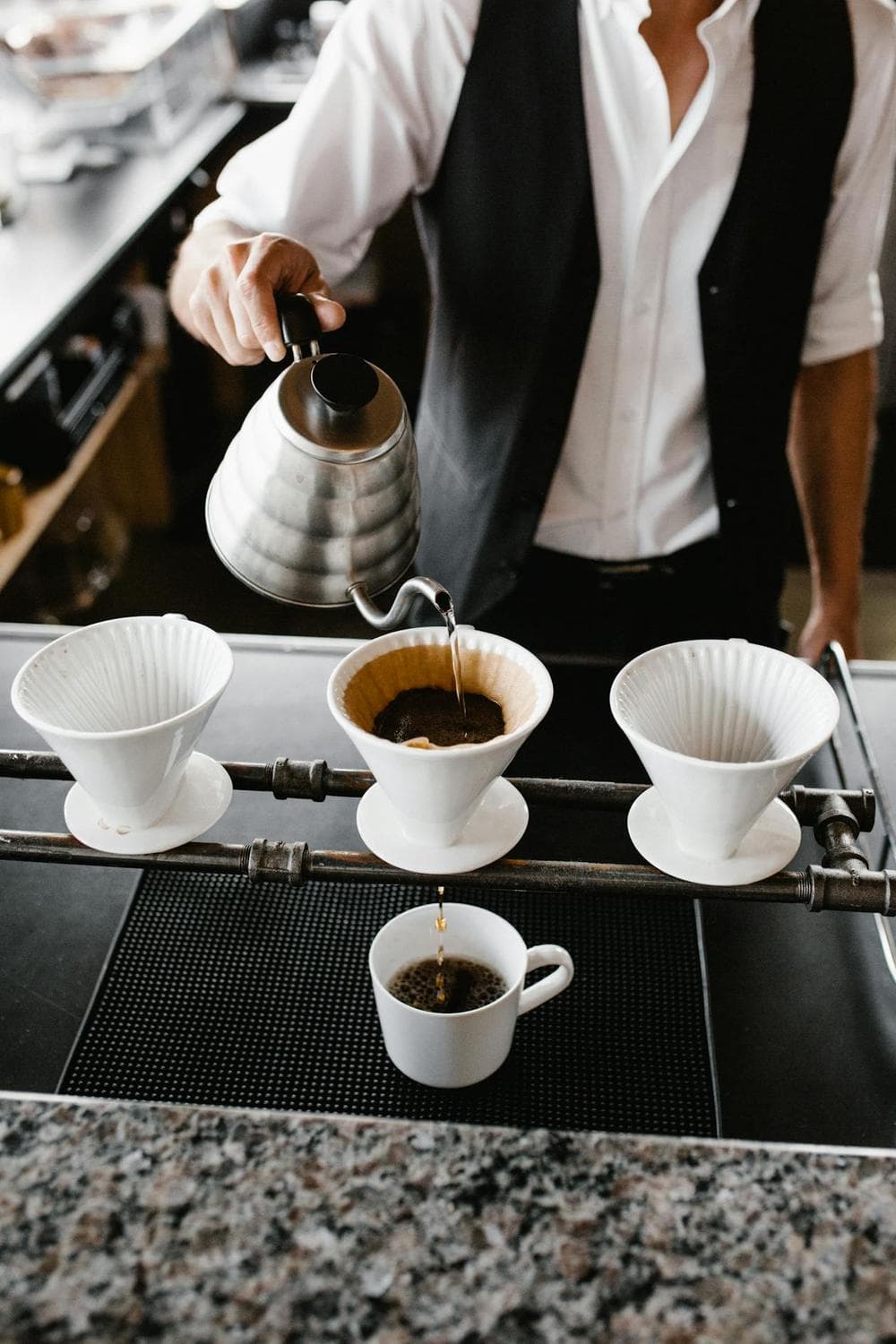
You pour hot water onto freshly ground coffee, and suddenly something happens: the coffee moves. It rises, expands, foams. A small dome of dark grounds forms, dotted with thousands of tiny bubbles. That's the bloom. And it isn't just pretty to watch, it's the most important moment in your pour over.
What Happens During the Bloom
During roasting, hundreds of aromatic compounds are created from the green beans. At the same time, an enormous amount of carbon dioxide is produced, trapped inside the roasted bean. Freshly roasted coffee is loaded with CO2. The moment you pour hot water onto the grounds, that gas is released. That's exactly what you see in the bloom: the CO2 escaping and foaming upward.
Why It Matters
If the gas stays in the grounds, water can't flow through the coffee properly. The CO2 pushes the water molecules away. The result: uneven extraction. Some spots get over-extracted, others barely extracted at all. The coffee tastes sour, thin, or off-balance. Let the gas escape in those first 30 seconds, and the water afterwards has clear paths and can extract evenly.
The Rule of Thumb: Twice the Coffee Weight
For the bloom, pour about twice the weight of your coffee in water. So 18 grams of coffee gets 36 to 50 grams of water. Enough to soak every ground, but not so much that real extraction starts. Pour in spirals from outside in, so every particle gets wet. Dry spots are a bloom killer because the gas stays trapped there.
Wait 30 to 45 Seconds
Now be patient. 30 to 45 seconds. In that window you'll see the dome rise and slowly settle back down. When the bloom flattens and the bubbles are gone, you've hit the moment for the main pour. Younger coffee takes longer, older coffee less, because less CO2 is left.
What the Bloom Tells You About Your Coffee
The bloom is an honest tool. If the coffee rises strongly and really foams, the roast is fresh. If almost nothing moves, the bean is likely weeks old and has lost most of its CO2. Specialty coffee should be drunk between one and four weeks after roasting. Before one week it's often too gassy and hard to extract. After four weeks the volatile aromas start fading.
Common Mistakes
Too little bloom water: the grounds aren't fully soaked, some particles stay dry and the gas stays trapped. Too much water: extraction starts too early and you don't really have a bloom phase. Pouring on too fast: the CO2 hasn't had time to escape, the main water fights the bubbles. Waiting too long: over 60 seconds of bloom can make the coffee bitter, because the grounds keep extracting in the heat.
What If the Coffee Doesn't Bloom at All?
Then it isn't fresh anymore. Pre-ground supermarket coffee usually barely blooms, because grinding multiplies the surface and lets the CO2 escape. That's one of the reasons freshly ground beans make such a difference. If the bloom is missing, brew the bean anyway, but make a note: next time, buy fresher, ideally straight from the roastery.
French Press and AeroPress Benefit Too
Bloom isn't just a pour over thing. With a French Press, adding a small amount of water just before the main pour, waiting 30 seconds, then stirring and topping up with the rest helps a lot. AeroPress also benefits noticeably from a 30-second bloom. Wherever you brew without pressure, the bloom helps.
The Tiny Step with the Big Payoff
Compared to grind size, water temperature, or brew ratio, the bloom feels like a detail. But you taste the difference in the cup right away. Try it: brew the same coffee twice, once with a 40-second bloom and once without. You'll never brew without one again.
On our marketplace, you'll find coffees from over 200 Swiss roasteries, all freshly roasted and perfect for a proper bloom. Check the roast date on the bag and give it those first 30 seconds of patience. It pays off.