Brewing
Hario V60: the little cone that changed the pour over world
Hario V60: the little cone that changed the pour over world
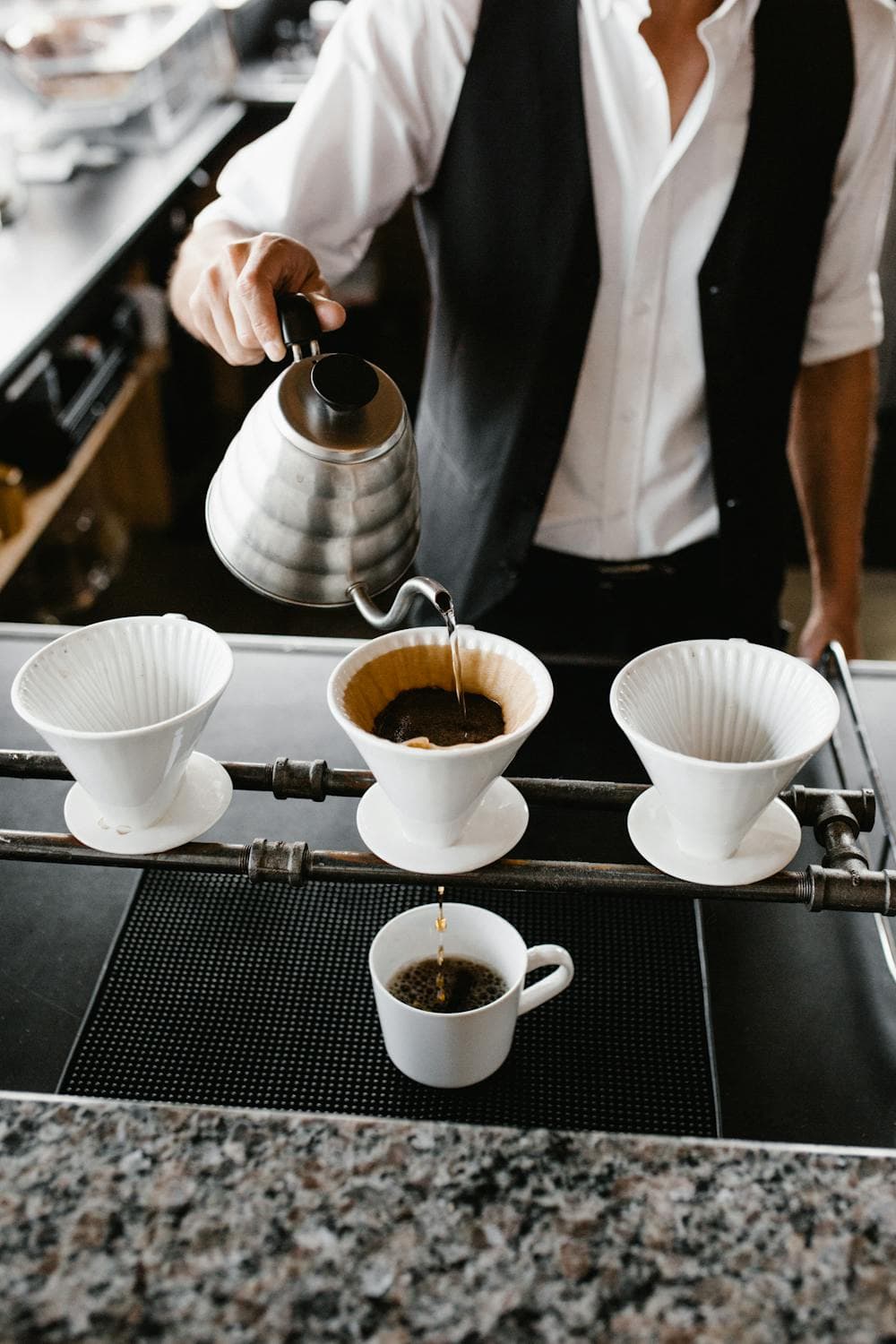
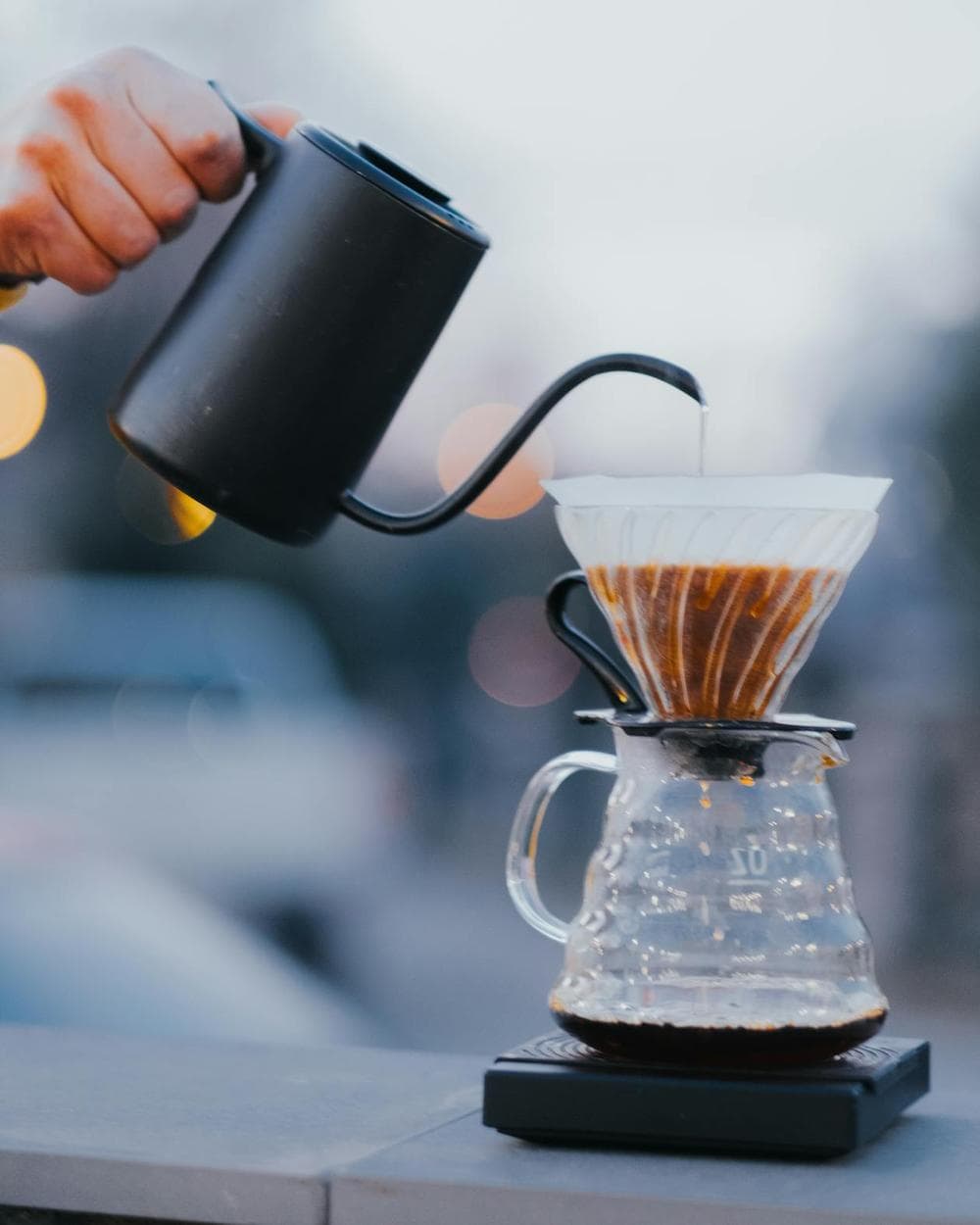
If you have been in a specialty coffee bar in the last ten years, you have seen it. A little cone on a carafe, a thin gooseneck kettle, a barista pouring concentrated circles. That is the Hario V60. More tool than machine, more craft than button. Once you have had a good V60, you do not forget it.
Hario, a Japanese glass company
Hario was founded in 1921 in Tokyo and originally made heat resistant laboratory glass. The company stayed a classic glass specialist for decades, until they introduced the V60 in 2005. The name comes from the cone angle: exactly 60 degrees. The V is for the shape, the 60 for the angle. Hard to be more pragmatic.
The idea was not new, pour over had a long history in Japan, often with cloth socks as filters. Hario wanted something consistent, something anyone could use at home. With wins at the early Brewers Cup competitions, the V60 became the standard tool of the third coffee wave.
What is actually special about the design
Three details make the V60 what it is. First, the 60 degree cone. It creates a deep coffee bed, so water saturates the whole bed instead of just running across the top. Second, the spiral ribs on the inner wall. They keep the paper from sticking to the plastic and let air escape while the coffee is blooming. Third, the single large hole at the bottom. It means the flow is determined by your grind and your pouring, not by the device. That is a blessing and a curse. You get a lot of control, but also a lot of responsibility.
Which beans the V60 loves
The V60 is a microscope. It filters the oils out, the result is clean and bright. Exactly what light specialty roasts need to shine. An Ethiopian with bergamot and jasmine, a Colombian with red fruit, a Geisha with orange blossom. These beans come alive in the V60, in a French press they would be a bit muffled. Medium roasts work too, but the darker the roast, the flatter the result. If you like dark, the press or the moka pot will be better.
The Hoffmann recipe, short and honest
James Hoffmann made a recipe popular that simply works. I use it almost daily. You need: 15 grams of coffee, 250 grams of water, a V60, a paper filter, a scale, a gooseneck kettle, and ideally a timer.
Grind: medium-fine, about like coarse table salt. Water temperature: 92 to 96 degrees. Place the filter, rinse with hot water, that washes out the paper taste and warms the carafe. Discard the water. Add coffee, press a small dent in the middle.
At zero seconds, pour 50 grams of water in slow circles, until everything is wet. Swirl the V60 gently to settle the grounds. Wait 45 seconds, that is the bloom. You see the coffee release CO2 and puff up.
At 45 seconds, pour slowly until you have 200 grams at 1:15. At 1:15, pour again to 250 grams. So all the water is in around 1:30. As soon as the pour is done, give the slurry one cross stir with a small spoon. That dislodges grounds stuck to the paper. The cup will fully drain between two and three minutes total.
The most common mistakes
Grind too fine: water sits forever in the cone, the cup turns bitter. Grind too coarse: water rushes through, the coffee is thin and sour. Water too cold: under extracted, sour, no sweetness. Pouring too fast or from too high: the bed gets blasted apart, you get uneven extraction.
If your cup tastes off, it is 90 percent one of these issues. Adjust grind first, then temperature, then pour technique. Exactly in that order.
Which V60 to buy
There are three versions: plastic, ceramic, glass. James Hoffmann himself recommends the plastic one, because it pulls the least heat from the brew. Ceramic looks the nicest but needs preheating. Glass is pretty and neutral but breakable. For starting out, the plastic V60 at around 12 francs plus a pack of 100 filters for around 8 francs is all you need.
What you need around it
A grinder is mandatory. Pre-ground coffee loses its aromas within hours, you would be paying for dead beans. A gooseneck kettle helps a lot because you can control the stream. A simple stovetop or electric kettle with a swan neck is fine to start. A kitchen scale accurate to 0.1 grams is gold. Otherwise you brew half blind.
Why the V60 is worth it
It is slow. It asks for your attention. Four minutes in the morning where you do nothing but pour water and watch coffee. That is not a loss, that is a gain. And at the end you have a cup in which the bean tastes as clearly as it does almost nowhere else. On Röstpost you find exactly the light specialty roasts from Swiss roasteries the V60 was built for. Try an Ethiopian Yirgacheffe or a washed Colombian, those are the classics to start with.