Brewing
French Press: full-bodied coffee, no fuss
French Press: full-bodied coffee, no fuss
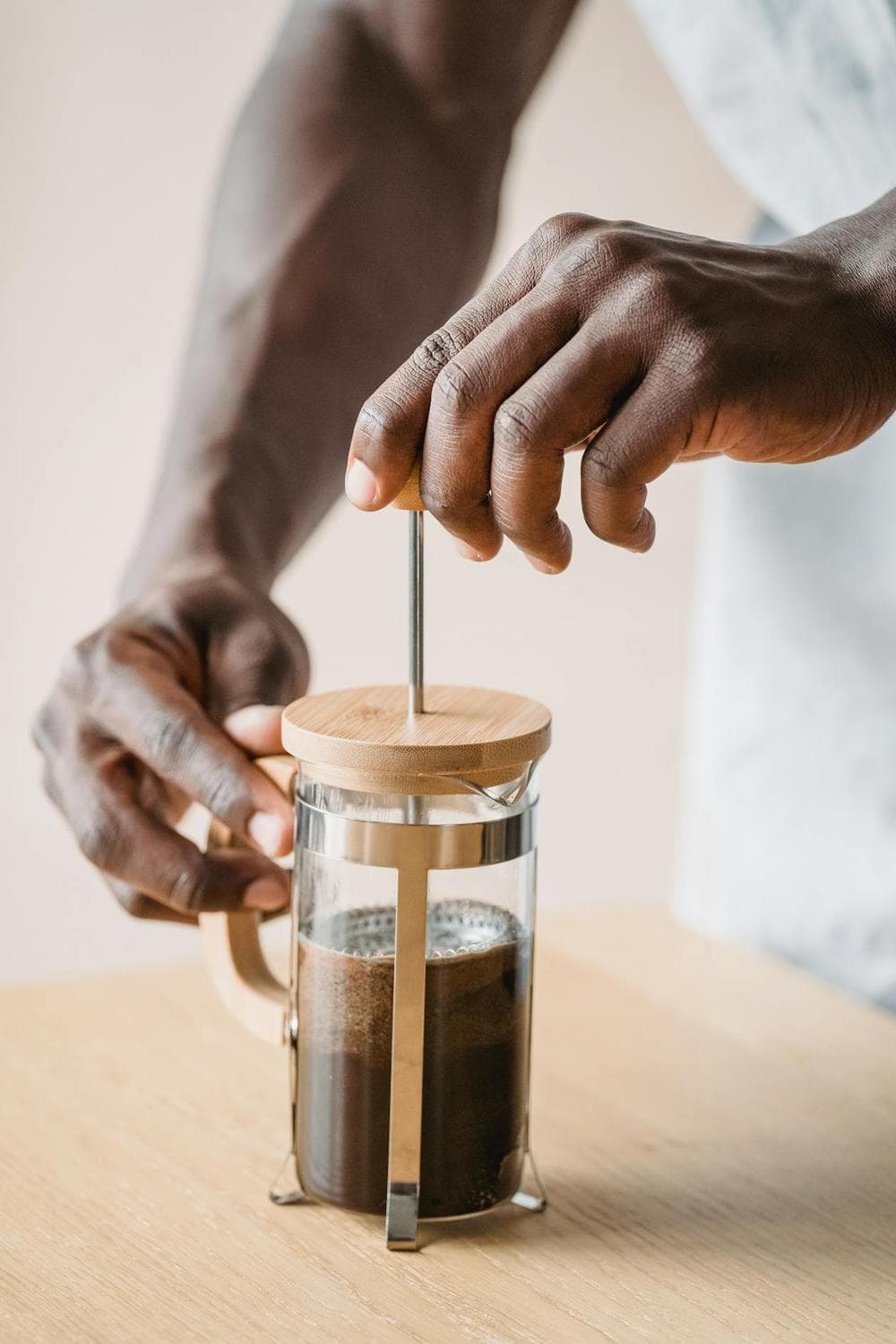
The French press sits in almost every Swiss kitchen. Glass, plunger, metal filter. Three parts, no electricity, no paper filter, no capsules. And yet most people make bad coffee with it. Not because the method is complicated, but because a few small details decide between a cloudy, bitter cup and a full-bodied, chocolatey one.
The story behind the pot
The first French press was patented in Milan in 1929 by two Italians named Attilio Calimani and Giulio Moneta. Despite the name, it doesn't actually come from France. It got its modern look in 1958, when the Swiss inventor Faliero Bondanini filed his patent in France and made it popular under the name Chambord. Almost nothing has changed since. A French press from 1960 works the same way as one today.
What makes it different
Unlike filter coffee, the grounds stay in the water the whole time. That's called immersion. The filter is metal and lets through the fine oils and aromatic compounds that paper filters would hold back. The result: a coffee with body, round flavours, and a slightly oily texture. Anyone used to bright, clean pour overs will taste the difference immediately. The French press is like a full milk latte compared to a clear espresso. Both have their place.
The recipe that actually works
The Specialty Coffee Association recommends a ratio of 1:15 to 1:17, so 30 grams of coffee to between 450 and 510 grams of water. I use 1:16: 30 grams of coffee to 500 grams of water. That fits a 0.5 litre press and makes two large cups.
Grind: coarse. Really coarse. Like sea salt. If the grind is too fine, everything passes through the metal filter and you end up with sediment in your cup plus bitter over-extraction. Water temperature: 92 to 96 degrees. So take it off the kettle, wait thirty seconds, then pour.
Step by step
Coffee into the press. Water poured firmly over it, so all the grounds are wet. Wait four minutes. Then briefly stir the crust that has formed on top with a spoon. Most of the grounds sink. Skim off the foam and floating grounds with the spoon and discard. Wait another five minutes, without pressing the plunger.
Then push the plunger down very slowly, just far enough for the filter disc to separate the coffee from the grounds. Don't press all the way down. Pour straight away. This is the method James Hoffmann made popular. It saves sediment and gives the coffee more sweetness, because the contact time is more controlled.
Why decanting matters
Never let the coffee sit in the press. Even with the plunger down, the grounds stay in the water and keep extracting. After ten minutes the coffee tastes bitter and woody. If you're not drinking it all at once, pour it straight into a carafe or thermos.
Which beans work
Medium to darker roasts shine in the French press. Chocolate, caramel, nut, dark berries. Light roasts work too, but often taste a bit flat, because the acidity gets lost in the full body. On Röstpost you'll find specialty beans from over 200 Swiss roasteries, many of them perfect for the press. Particularly nice: a Brazilian coffee with chocolate and nut notes, or an Indonesian one with tobacco and dark fruit.
The most common mistakes
Water too hot: bitter over-extraction. Grind too fine: sediment and bitterness. Too little coffee: thin, watery taste. Too long in the press: everything tips into bitter. Plunging too fast: grounds get squeezed through the filter. No stirring the crust: uneven extraction.
What makes the press special in the end
It's the most honest method. No chemistry, no electricity, no paper. You hear the water hit the coffee. You see the beans work. You wait. And at the end you get a cup with everything the bean has to offer. If the bean is good, the coffee is good. If not, you taste that immediately too. The press doesn't lie.