Brewing
Espresso Crema: what the golden layer really tells you
Espresso Crema: what the golden layer really tells you
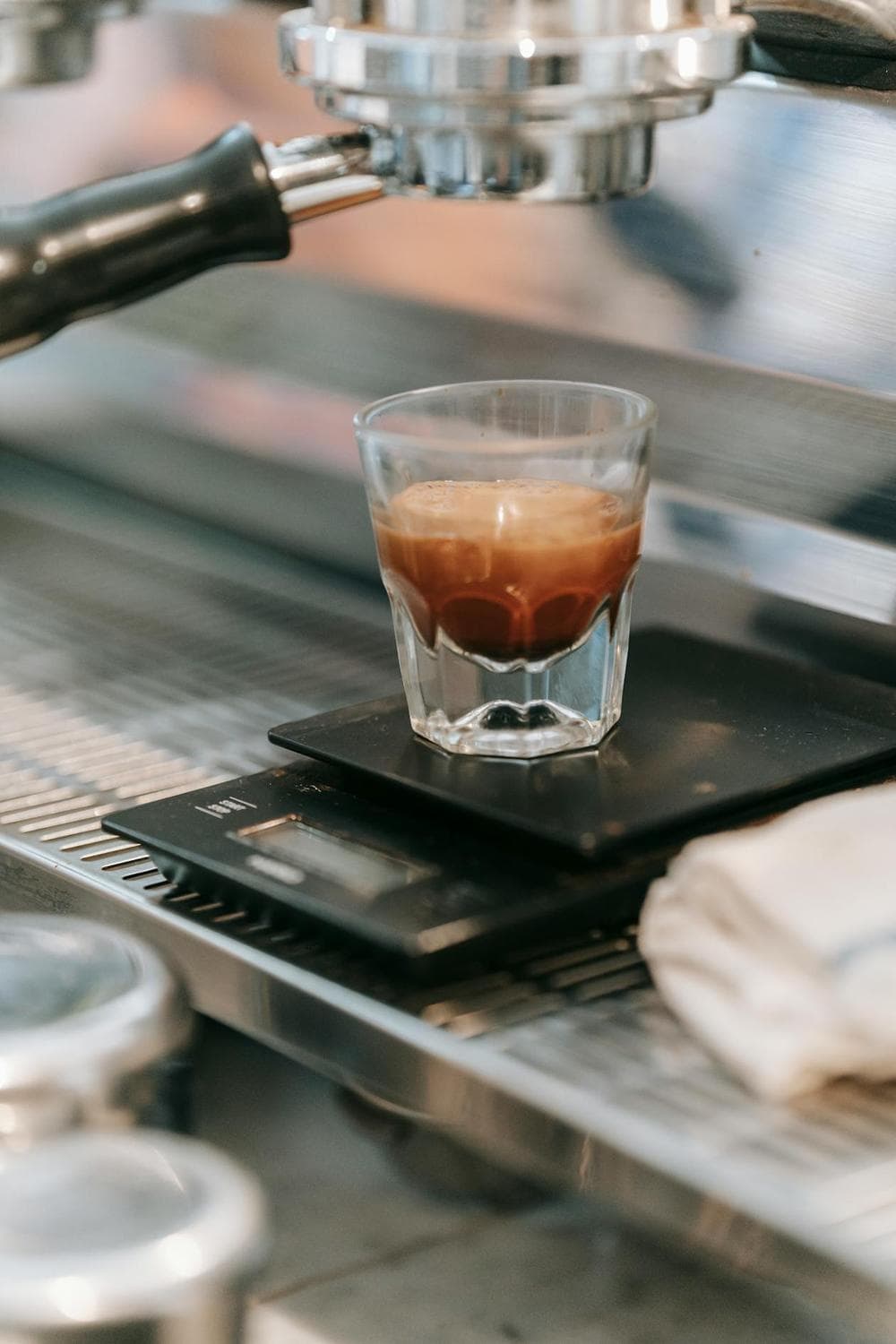
A good espresso comes with a crown of foam. Golden brown, dense, with fine darker streaks. This layer is called crema. It's how you recognise an espresso before you even smell it. But what actually is it, and does it really tell you anything about the quality of the cup?
What is crema?
Crema is an emulsion. Three things meet: tiny carbon dioxide bubbles, emulsified oils from the beans, and dissolved compounds like proteins, melanoidins, and polysaccharides. Those dissolved compounds act like a surfactant and hold the bubbles together. The result is the foamy, slightly oily layer you see on a freshly pulled espresso.
Why you need pressure
An espresso machine pushes hot water through finely ground coffee at around nine bar. That's nine times the atmospheric pressure outside. Filter coffee, French press, or pour over don't do any of this. There's no crema there, because the water just flows down through gravity. Only pressure forces two things at once: the CO2 stored in the coffee is released as tiny bubbles, and the oils are broken up so finely that they don't float to the top but stay suspended in the liquid.
CO2, the gas from roasting
During roasting, a chain reaction runs through the bean. It produces a large amount of carbon dioxide, which gets trapped in the bean's cell structure. A freshly roasted bean is therefore like a small bottle of carbonated water. In the first days after roasting, it degasses heavily. After three to four weeks, most of the CO2 is gone. That's exactly why old coffee gives less crema, no matter how good your machine is. The bean simply has nothing left to release.
Arabica or Robusta?
Robusta beans give more crema. It's darker, denser, and lasts longer. The reason: more carbohydrates and proteins, and less fat. Classic Italian espresso blends therefore often add robusta to thicken the crema. Pure arabica espressos have a finer, lighter crema. It's thinner but actually slightly more chemically stable. Specialty coffee almost always works with pure arabica, because the flavour is more interesting. The crema is then often more subtle, but the cup tastes more exciting.
What the colour tells you
A beautiful crema is hazelnut brown, sometimes with darker streaks, what's known as tiger striping. If the crema is very pale or almost whitish, the extraction was probably too short or the water too cold. The dissolved compounds that would hold the bubbles together aren't there. If the crema is very dark, almost black with a lighter edge, the shot probably ran too long or the roast was very dark. That's not necessarily bad, but a shot like that often tastes bitter.
The big myth
For a long time the rule was: lots of crema, good espresso. That's not really true. Crema tells you mainly about freshness, bean type, and extraction. It tells you nothing about whether the coffee actually tastes good. A bean from cheap industrial roasting with a high robusta share produces an impressive, finger-thick crema. The espresso still tastes like burnt cardboard. A light specialty roast with pure arabica has a delicate, almost shy crema and tastes of ripe apricots, chocolate, and caramel. The cup matters, not the show on top.
How long does crema last?
A good crema holds for one to two minutes, then slowly collapses. That's normal. If it stays stable for five minutes and looks like whipped cream, you probably have a lot of robusta in the blend, or the beans are very fresh, roughly three to seven days after roasting. If the crema disappears within ten seconds, the beans are probably old or the machine isn't producing enough pressure.
The first sip
Pros stir the crema briefly with a spoon before drinking. That mixes the slightly bitter notes from the crema with the sweeter, rounder espresso below. Drink the crema separately and you taste an intense, sometimes slightly bitter foam layer first. That can be impressive, but it's rarely what the bean is really capable of.
What to take away
Crema is a hint, not a verdict. It tells you whether your beans are fresh and whether your extraction is roughly on point. It does not tell you whether the espresso tastes good to you. In the end, trust the cup, not the photo. On our marketplace you'll find specialty espressos from over 200 Swiss roasteries. Freshly roasted, often single-origin arabica, with everything a real crema needs. And with what actually counts in the end: flavour.