Brewing
Brew Ratio: The Coffee-to-Water Balance That Changes Everything
Brew Ratio: The Coffee-to-Water Balance That Changes Everything
Two people brew the same coffee. Same machine, same water, same bean. One cup tastes sour and thin. The other round and sweet. What did the first person do wrong? Probably just one thing: the ratio.
What is a Brew Ratio?
Brew ratio just means: how much coffee to how much water. Written as 1:X. 1:15 means one gram of coffee to fifteen grams of water. 1:18 means one gram to eighteen grams. No teaspoons. No scoops. Grams. Always weighed.
The SCA Golden Cup Standard
Decades ago, the Specialty Coffee Association defined a reference point now known as the Golden Cup. 55 grams of coffee per liter of water. Plus or minus ten percent, so anywhere from 49.5 to 60.5 grams. That works out to roughly a 1:18 ratio. On top of that: extraction should sit between 18 and 22 percent, and total dissolved solids (TDS) between 1.15 and 1.35 percent. These are the numbers baristas and roasters actually work with.
Extraction, Briefly
A roasted coffee bean is about 30 percent soluble in water. Meaning: you can't pull out more than 30 percent no matter what you do. You also don't want to, and that's the point. Below 18 percent extraction, coffee tastes sour, grassy, unfinished. Above 22 percent, it turns bitter, dry, astringent. Between 18 and 22 percent is the zone where most people call coffee good.
Filter Coffee: Which Ratio When?
The ratio is your volume knob. Turn the number down and the coffee gets more intense. Turn it up and it gets lighter.
1:15 is strong. Dense body, punchy flavors. Good for darker roasts and for coffees with lots of sweetness and chocolate.
1:16 to 1:17 is the mainstream. Balanced, drinkable, forgives small mistakes. A good starting point if you have no idea where to begin.
1:18 is the SCA standard. Clean, clear body, acidity and fruit come through more. Good for light roasts and for expressive washed coffees from Ethiopia or Kenya.
Anything past 1:19 starts to feel like tea. Not wrong, just close to translucent. Sometimes that's exactly what you want.
A Concrete Starting Recipe
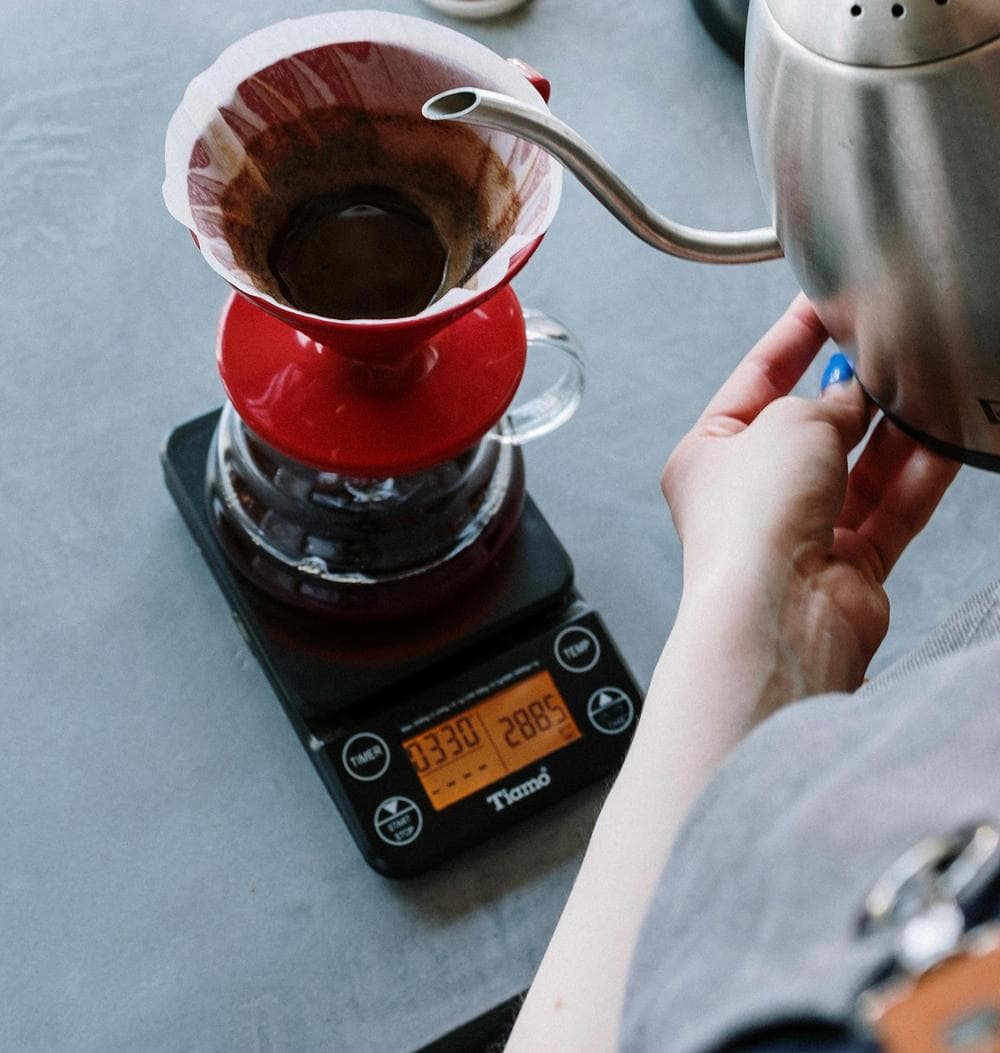
If you want to brew a pour over today and don't know where to start, try this: 18 grams of coffee, medium grind, 300 grams of water at 94 degrees Celsius. That's 1:16.6. You'll end up with about 250 grams of coffee in the cup. If it tastes sour, next time use 17 grams with the same 300 grams of water. If it tastes bitter, use 19 grams. A single gram can make an audible difference.
Espresso is Different
Espresso doesn't measure what goes in versus what goes in. It measures what goes into the portafilter versus what ends up in the cup. The common ratio is 1:2. So: 18 grams of dry coffee in the portafilter, 36 grams of liquid espresso in the cup. Ristretto is shorter (around 1:1.5), lungo is longer (around 1:3). Shorter means more intense and sweeter. Longer means thinner, often more bitter, because more has been extracted.
Why a Scale Changes Everything
A tablespoon of ground coffee weighs between five and nine grams depending on grind size. If you measure with tablespoons, your ratio is different every day. A cheap kitchen scale with 0.1 gram resolution costs thirty francs and makes more of a difference than any investment in expensive beans you then dose wrong. Scale underneath, coffee on top, tare, water on top. That's all.
What This Looks Like in Practice
A good specialty coffee responds like an instrument. Brew it right and it rings. The ratio is the first knob you reach for, before grind size and water temperature. Once you know your favorite roaster's beans and always brew at the same ratio, you start to know the cup before the first sip. That's a nice feeling.
On our marketplace you'll find coffees from over 200 Swiss roasteries. Many roasters print a recommended ratio right on the bag. A good starting point before you begin experimenting on your own.