Coffee Knowledge
Q-Grader and the SCA system: what an 80-point score says about your coffee
Q-Grader and the SCA system: what an 80-point score says about your coffee
The bag says 86 points. Another one says 88. A third one says nothing at all, just the word specialty. What does that even mean? Who hands out those points? And can you trust them?
Behind those numbers sits a system the Specialty Coffee Association has built up over decades. At the centre is the Q-Grader. A person who has proven they taste coffee the same way as thousands of other certified colleagues around the world. This is not a marketing idea. It is quality control that has to work between a farmer in Ethiopia and a cup in Zürich.
What a Q-Grader actually is
A Q-Grader is a person with an SCA license that confirms they can score coffee following a fixed protocol. To earn the license, you have to pass a week of exams. Twenty-two tests across six days in total. Taste recognition, scent identification, telling organic acids apart, spotting defects in green beans, calibrating with other Q-Graders. Anyone who fails can re-sit after three years.
The point is not to show off a particularly fine palate. The point is repeatability. Two Q-Graders who score the same coffee blind should land on a similar number. Otherwise the score would be worthless.
The 80-point threshold
Here is the magic number. For a coffee to be called specialty, it has to score at least 80 out of 100. Below 80 it is commodity coffee, mass market. Above 80 it gets interesting.
The SCA splits the specialty class into four bands. Eighty to nearly eighty-five is Very Good. Eighty-five to ninety is Excellent. Ninety or more is Outstanding. That is the top, only a very small number of coffees reach it each year. Most good specialty coffees you find at a Swiss roastery sit between 84 and 88 points.
The old cupping form: ten attributes, one number
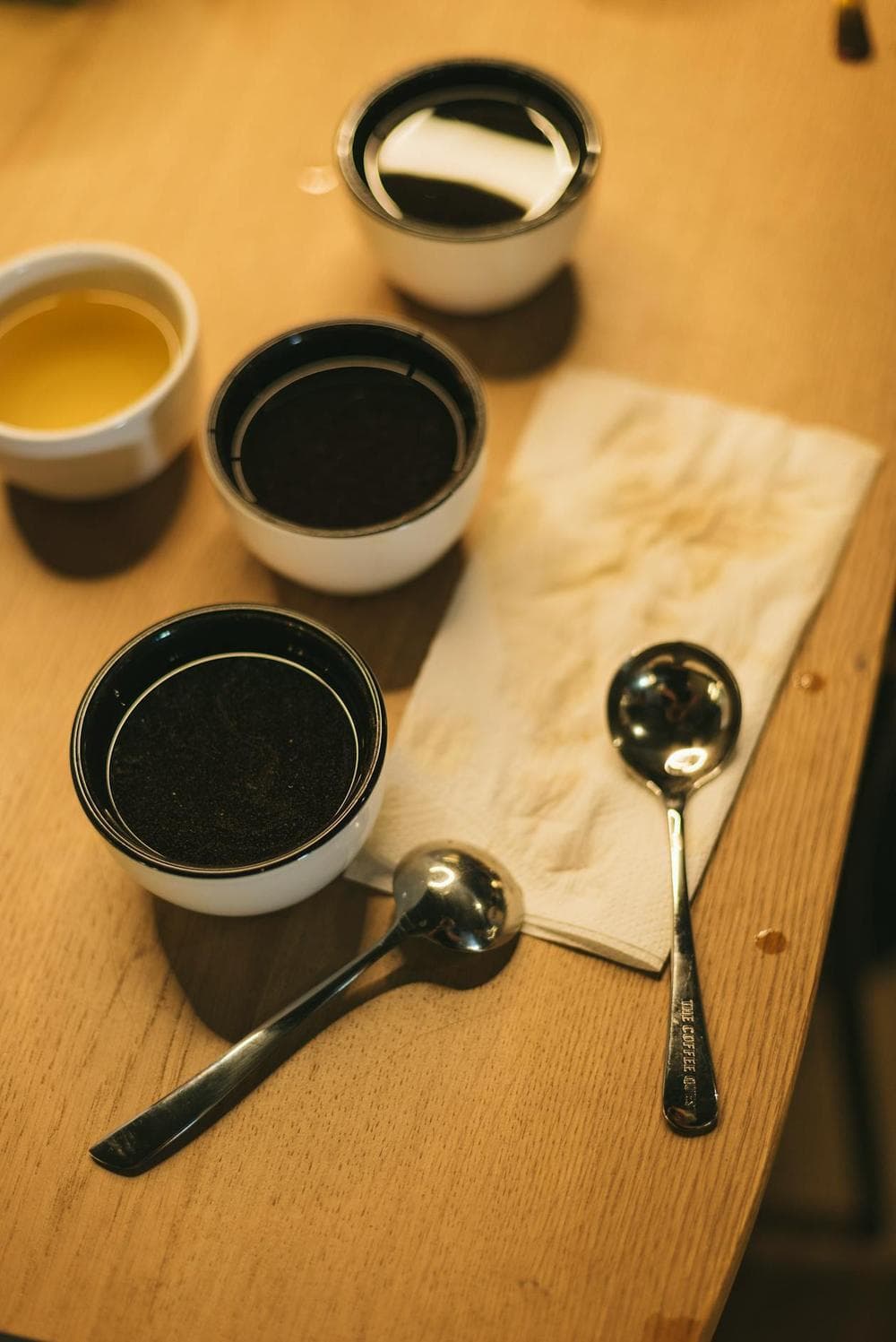
Until 2024 the system was clearly defined. On a cupping table you usually had five cups per coffee. The Q-Grader scored each coffee on ten attributes.
Seven of them got numerical scores, each on a scale from six to ten in 0.25 steps. The seven are: fragrance and aroma, flavor, aftertaste, acidity, body, balance and overall. Three more were not scored but ticked: uniformity, clean cup and sweetness. Defects subtracted points.
From these came a total score between zero and one hundred. The threshold: eighty.
What is new in 2025: Coffee Value Assessment
The SCA has revised the system. Since 2025, the Coffee Value Assessment, CVA for short, is officially in place. It replaces the old cupping form from 2004. Three new standards govern it: Sample Preparation and Cupping Mechanics, Descriptive Assessment and Affective Assessment.
The main shift: description and judgement are now separated. Before, a single number expressed both how the coffee tastes and whether that is good. The CVA splits that. First it describes what is in the coffee. Then it scores whether that is liked. A fruity acidity is objectively there. Whether someone enjoys it depends on the market, the culture, the personal taste.
The Q-Grader program was also rebuilt in 2025. It is now based on the CVA and is better suited to today's specialty market. The old 80-point scoring is still around as a reference, but the system has broadened.
What this means for your cup
When a bag says 86 points, you now know: that is in the Excellent band. An SCA-certified person scored the coffee blind, following a protocol that Q-Graders calibrate to all over the world. This is not the roaster patting themselves on the back. The points are usually given by the importer or the roaster, but always against the same scale.
That does not mean you will love every 88-point coffee more than every 84-point coffee. Scoring and personal preference are not the same. The new CVA system makes that very explicit. But the score gives you an orientation. It tells you that a trained person has checked the coffee is technically sound, that it is roasted at a high level and that it shows characteristic aromas matching the bean, the process and the altitude.
What you can look for yourself
You do not need to be a Q-Grader to drink better coffee. But three of the scored attributes you can pick up on quickly. Acidity: do you taste a clean, fresh note, like apple or berries? Body: does the coffee feel light and watery or thick and syrupy? Balance: do the flavors fit together, or does one thing stick out, a heavy bitterness or a sharp acidity?
Pay attention to those a few times in a row, and you already have half the cupping table in your head.
Specialty at Röstpost
On Röstpost you find specialty coffees from more than two hundred Swiss roasters. Many product pages show the SCA score when the roaster has it. That helps with orientation, but it is not the whole story. Pick a few beans with different profiles, compare them, take notes. After three or four coffees you will start to feel where your own favorite band sits. That is worth more than any number on a bag.