Coffee Knowledge
The Coffee Cherry: What Really Grows Around the Bean
The Coffee Cherry: What Really Grows Around the Bean
What we call a coffee bean isn't actually a bean. It's the seed of a small, bright red fruit that grows on the bush like a cherry. Around that seed sit layers most coffee drinkers have never heard of. And those layers help decide how the coffee tastes in the cup.
What a Coffee Cherry is Made Of
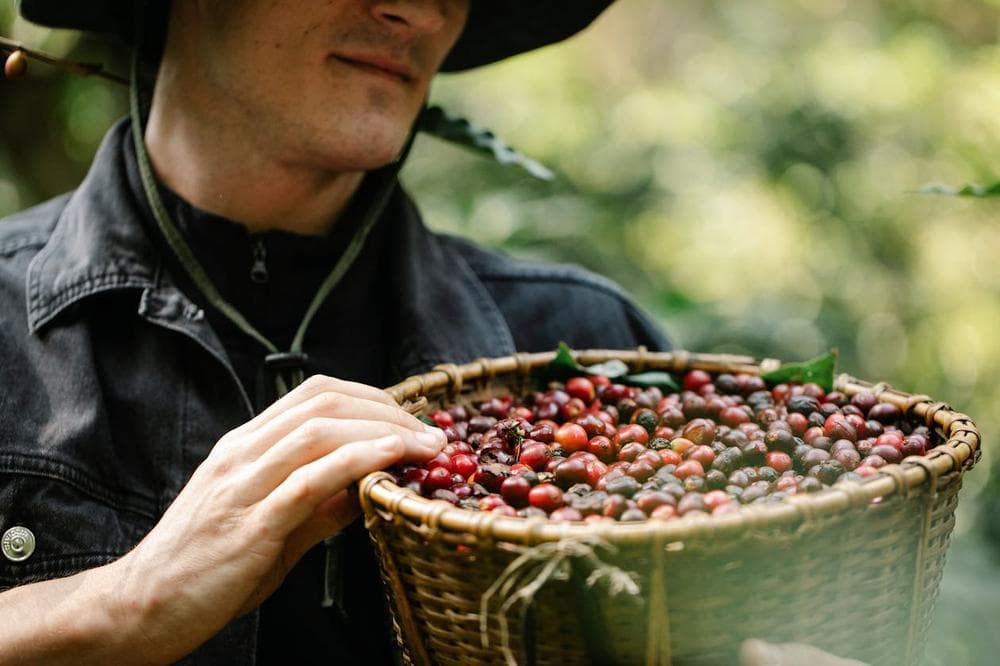
On the outside sits the skin, called the exocarp. It's thin, smooth, and changes color as the fruit ripens. First green, then yellow, then orange or deep red depending on the variety. Color is the most important signal for pickers.
Right underneath is the pulp, the mesocarp. It's juicy and sweet, similar in texture to a small berry. In some growing countries, the pulp is processed into Cascara tea instead of being thrown away.
Between pulp and bean sits a sticky, gel-like layer called the mucilage. It's full of sugar and pectin and it's the layer that matters most during processing. Depending on how much of it stays on the bean and how it's fermented, the coffee will later taste sweeter, fruitier, or cleaner.
Below that comes the parchment, a hard, paper-like husk. It's beige, dry, and protects the bean during drying and storage. Only shortly before roasting is the parchment removed in the hulling step.
At the very center sits the bean, surrounded by a paper-thin silver skin. That's the chaff you sometimes see in the grinder. We call them beans, but biologically they're seeds.
Two Beans, Sometimes One
Most coffee cherries hold two beans, flat sides facing each other. That's where the typical half-round cross section comes from. In about five percent of cherries, only one round seed develops, called a peaberry. Some roasters sort these out because they roast differently due to their round shape and often taste more concentrated.
Seven to Nine Months from Flower to Ripe
A coffee plant blooms white and smells like jasmine. Cherries grow from those flowers, and it takes seven to nine months until they're ripe. Once a cherry reaches optimal ripeness, it has a window of only ten to fourteen days before it becomes overripe. Overripe cherries lose sweetness and develop unpleasant, fermented notes. Underripe cherries taste sour and grassy. That's exactly why harvest is so delicate.
By Hand or in Strips
There are two ways to harvest coffee cherries. With selective picking, harvesters walk the fields every eight to ten days and only pick cherries at peak ripeness. It's labor-intensive, expensive, and slow, but it's the only way real specialty coffee comes into being.
With strip picking, harvesters strip the entire branch in one motion. Ripe, unripe, overripe, everything ends up in the basket. It's fast and cheaper, but the result is a mix with unavoidable flaws. Mechanical harvesting works similarly and is mostly used in Brazil.
Most coffees you find on our marketplace are selectively picked. That's the first, often invisible reason they taste the way they do.
Why This Should Matter to You
Next time you hold a cup of coffee, think briefly of the cherry. Of the sugar and pectin layer that was fermented after harvest to bring sweetness into the bean. Of the hand that picked exactly that cherry because it was ripe and the one next to it wasn't. Of the months it took to get this far.
Specialty coffee isn't marketing. It's the sum of decisions made in the growing country, long before the bean reaches Switzerland.
On our marketplace, you'll find coffees from over 200 Swiss roasteries, many of them working with farmers who pick selectively. If you want to know what that effort feels like in the cup, it's a good starting point.