Coffee Knowledge
Roasting coffee: what really happens between green bean and cup
Roasting coffee: what really happens between green bean and cup
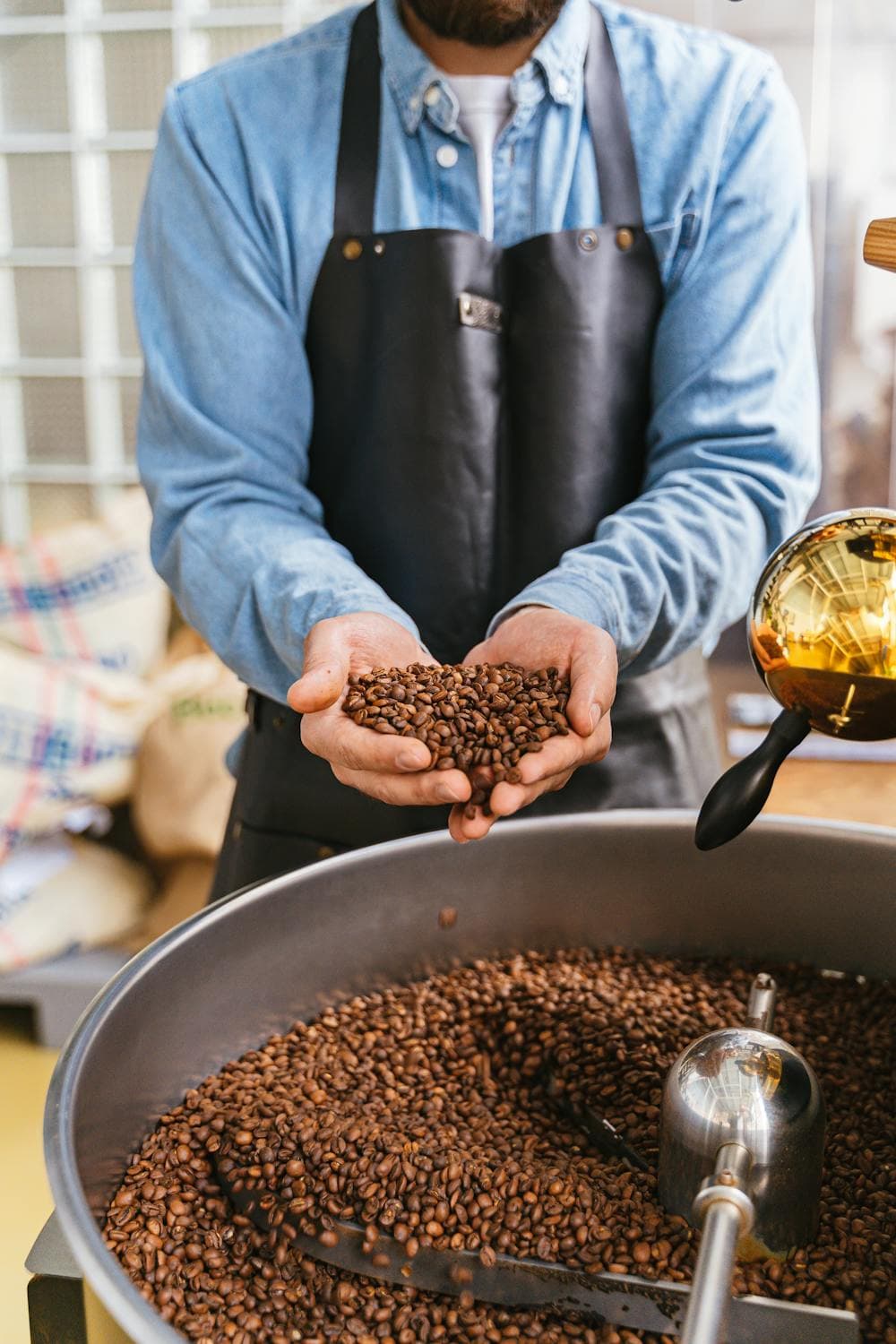
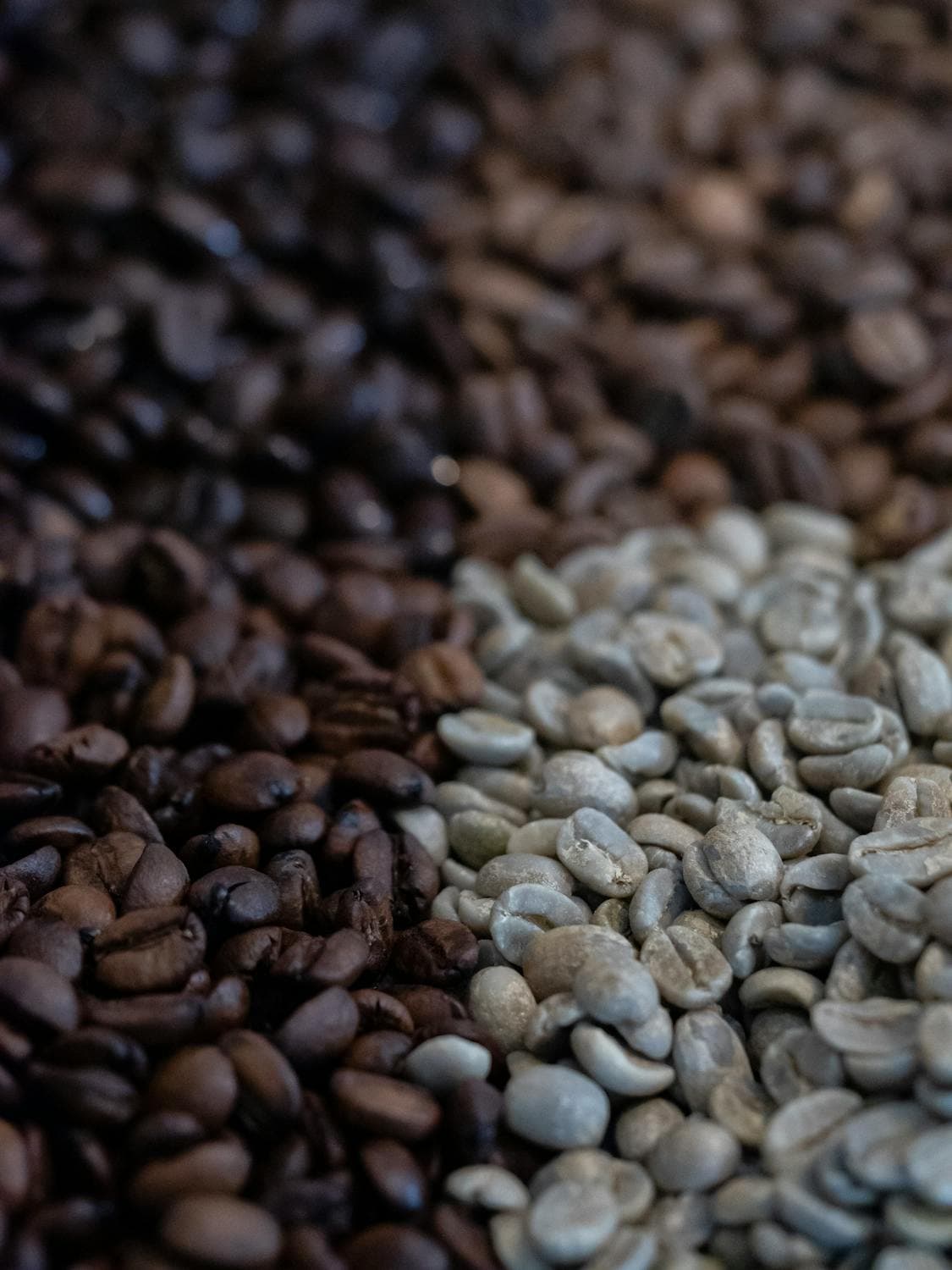
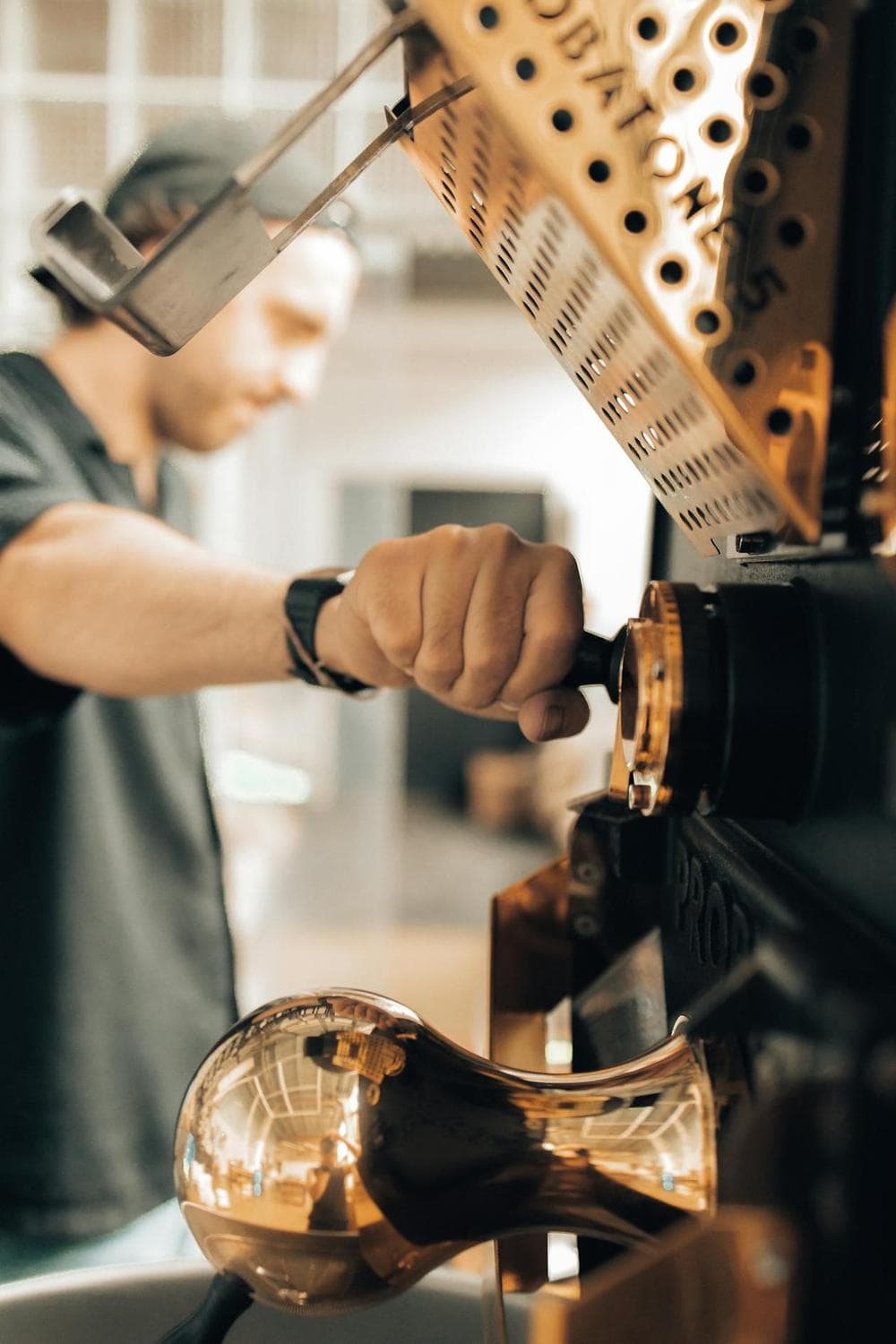
A green coffee bean in your hand feels like a hard seed. Almost no smell, a touch grassy, a touch vegetable. None of what you expect in your morning cup. Between this green bean and the dark, fragrant bean in the bag there are twelve to fifteen minutes inside a roaster's drum. In those minutes more chemistry happens than in the whole rest of the coffee journey. Once you understand what is going on in there, you understand why the same bean from the same farm can taste completely different at two different roasteries.
Three phases, two cracks
The Specialty Coffee Association splits roasting into three phases: drying, Maillard, and development. Two acoustic events mark the transitions: first crack and second crack. The roaster hears the popping like popcorn, the smell changes completely several times, the bean changes colour, volume, and weight. Once you have watched it from up close, you do not forget it.
Phase one: drying
A green bean contains roughly ten to twelve percent water. In the first third of the roast, that has to come out. The roaster takes the bean from room temperature up to about 150 degrees Celsius. Nothing flavourful happens yet, the bean turns yellow, it loses water, it smells like hay and bread. The drying phase takes four to six minutes, depending on the roaster and the batch. If it is too short, moisture stays in the centre and the coffee tastes grassy or slightly musty. If it is too long, the bean turns flat and dull, because the important aromatic compounds that should form later run out of time.
Phase two: Maillard
Around 150 degrees the Maillard reaction starts. It is the same chemical reaction that browns bread crust, gives steak its aroma, and makes fries taste the way they do. Amino acids and sugars react with each other, long molecule chains break apart, hundreds of new aromas form. In coffee, these are the precursors to caramel, chocolate, nut, bread crust, sometimes almond or toffee. The bean turns brown, it keeps losing water, the volume slowly starts to grow.
The Maillard phase is the most delicate part of the whole roast. Too much heat here, and the gentle precursor aromas get destroyed before they can develop. Too little heat, and the reaction stays incomplete, the coffee tastes warmed up and lifeless. Experienced roasters often reduce energy here and let the bean work patiently.
First crack
At around 196 degrees Celsius you hear the first cracks. Inside the bean, water vapour and CO2 have built up so much pressure that the cell walls give way and burst open. It sounds like popcorn just starting to pop, only quieter. This is the moment that changes everything. Up to here the reaction was endothermic, the bean was absorbing energy. Now it turns exothermic, the bean releases energy. It grows visibly in volume, the silver skin flakes off, and for the first time it looks like a roasted bean as you know it from the bag.
Phase three: development
From the start of first crack until the end of the roast, the development phase runs. This is where the character of the coffee is decided once and for all. Caramelisation reinforces sweetness, more Maillard products build complexity, organic acids get partly broken down. The longer the coffee stays in this phase, the rounder, more chocolatey, darker it becomes. The shorter, the brighter, fruitier, more acid driven.
If you stop the roast soon after first crack, you get a light to medium roast, the kind specialty bars often serve. If you let it run, eventually you reach second crack. That happens between 225 and 230 degrees, a second, quieter pop, because cellulose structures break and oils come to the surface. The bean turns oily and shiny, dark, sometimes almost black. That is classic Italian espresso territory. Specialty roasters usually stop before second crack, because after that the fine origin aromas are basically completely covered up.
Development Time Ratio: the number professionals carry in their head
When is a roast finished? The simple answer would be: when it is the right colour. The honest answer is a number that American coffee expert Scott Rao made famous: Development Time Ratio, or DTR for short. It describes what percentage of the total roast happens after first crack. Example: a roast lasts 10 minutes, first crack happens at 8 minutes, then the development phase runs for two minutes. That gives a DTR of 20 percent.
Rao has analysed over 20'000 roast curves and found that the best profiles almost always sat between 20 and 25 percent DTR. Below 18 percent, the roast often feels underdeveloped, the acidity is sharp, the sweetness is missing. Above 25 percent, the profile tips into baked, the fruit notes disappear, the coffee tastes flat. Bright profiles with focused acidity often sit at 15 to 18 percent, classic filter roasts with balance at 20 to 25, darker espresso roasts at 25 to 30 percent. It is not a rigid rule, but a railing that good roasters lean on.
What the bean loses on the way
On the scale you notice the roast immediately. A green bean that goes into the drum at 100 grams comes out at about 82 to 88 grams. The loss comes from water and small volatile compounds that evaporate during roasting. Light roasts lose around 12 to 14 percent of their weight, dark roasts 18 to 20 percent. Volume goes the other way: the bean expands by 50 to 100 percent, because the CO2 cracks the cell structure open from inside. So a dark bean is lighter, but bigger than the green starting bean.
What you can read on the bag
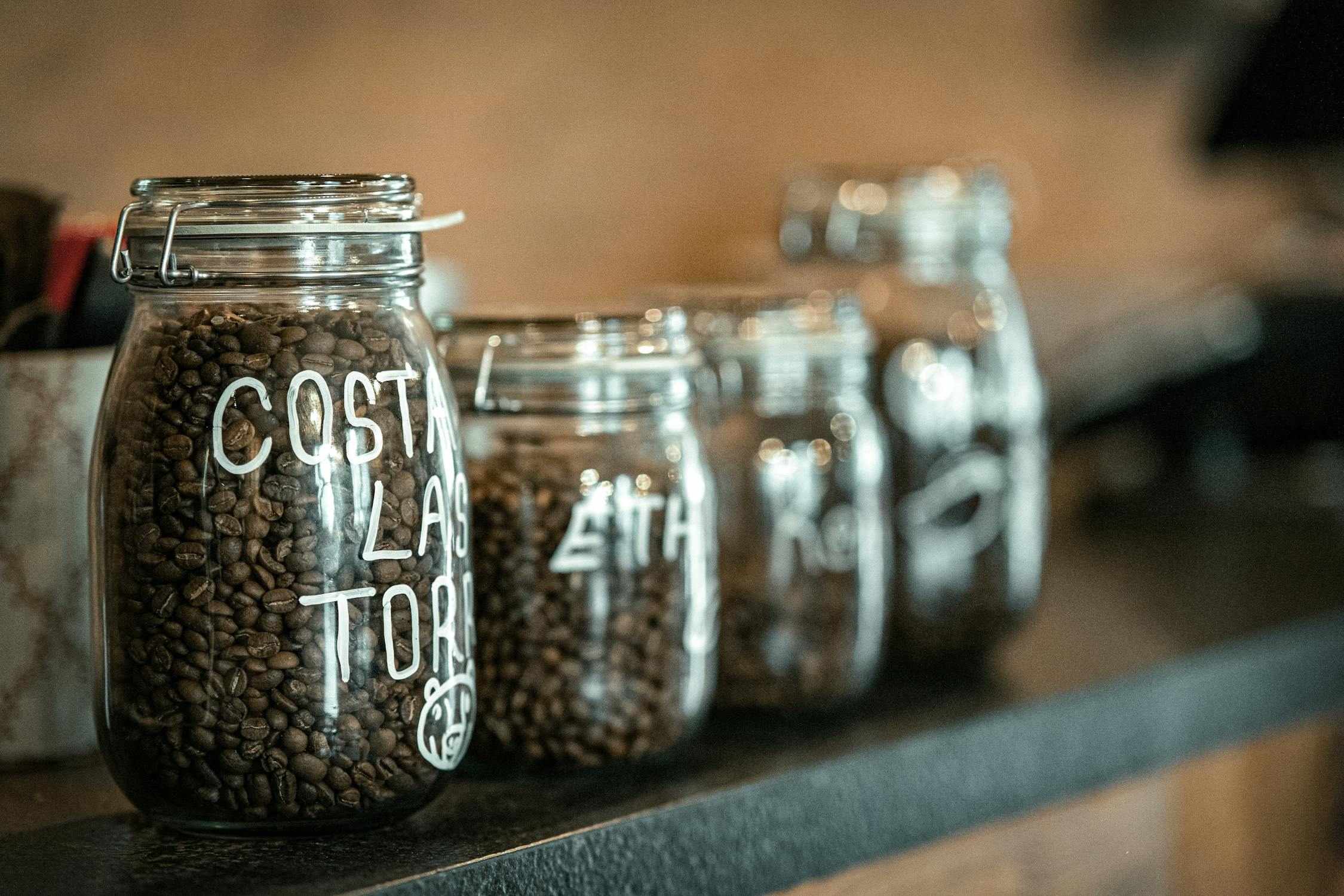
An honest specialty bag tells you more than just variety and origin. If there is a roast date on it, you can be sure the roaster takes their job seriously. Some roasters even share the roast profile: drum temperature at charge, time to first crack, total time, sometimes even DTR. You do not have to read those numbers yourself. But when they are there, you know somebody thought it through. Freshness makes the biggest difference: coffee is at its best between seven and 21 days after roasting, after that the aroma starts to slip.
Why two roasters can make different coffee from the same bean
The green coffee is only half the story. Two roasters can buy the same Ethiopian Heirloom bean, the same lot. One pulls a bright profile with short development, focused on bergamot and jasmine. The other goes a bit deeper, longer development, brings out apricot and honey. Both are right. Both are specialty. They are simply different interpretations of the same bean.
That is exactly why the Swiss specialty market is interesting. On Röstpost you find beans from over 200 Swiss roasteries. When you find a flavour you like, it is worth trying the same origin from a different roaster. You will be surprised what the profile can do with the bean. That is the story behind every coffee you buy on Röstpost: not just the bean, but also the hand that roasted it.