Coffee Knowledge
Coffee Cupping: How Professionals Taste Coffee
Coffee Cupping: How Professionals Taste Coffee
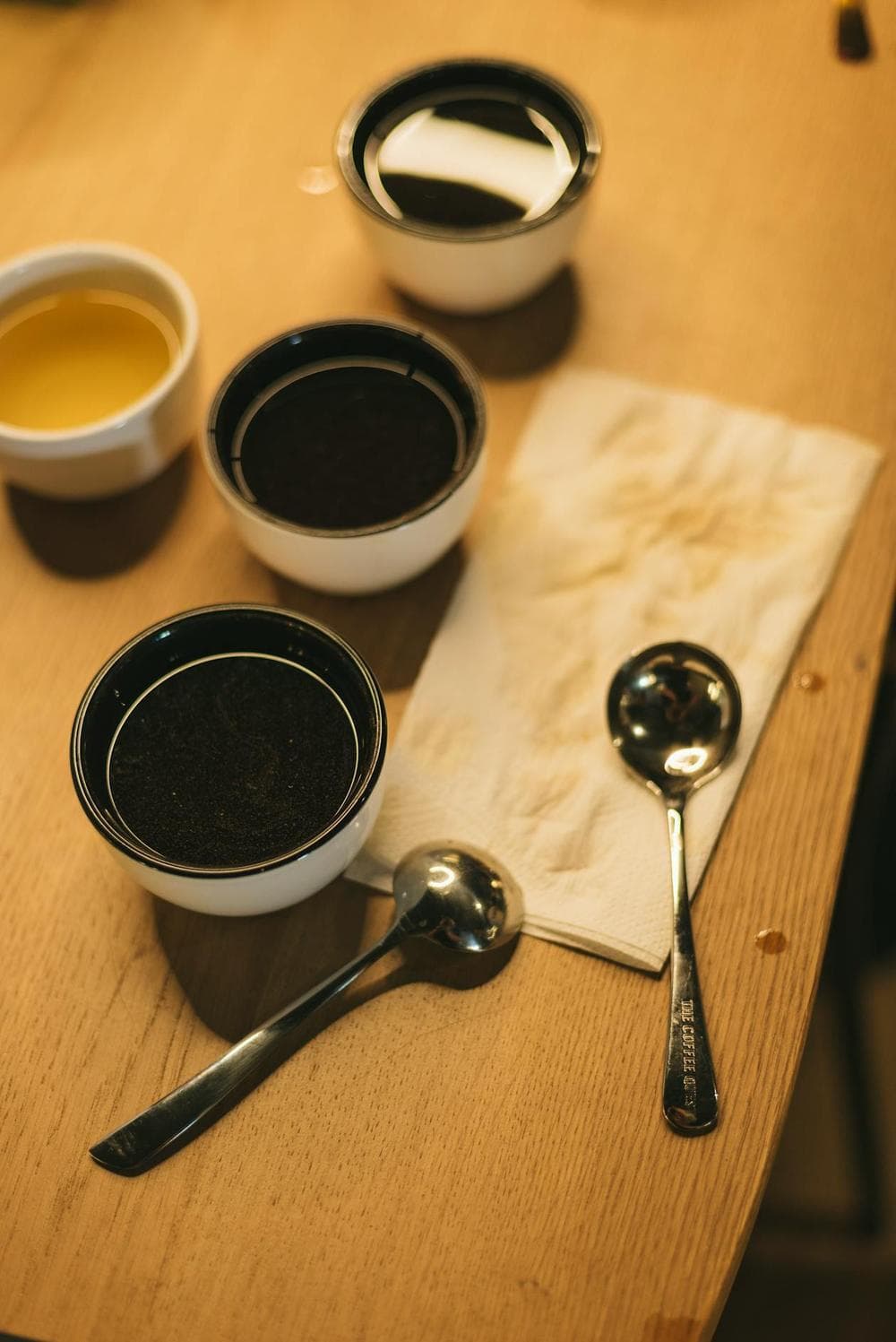
Picture a room that smells of freshly ground coffee. On a long table, twenty small glasses stand in a row, next to them spoons, a spit cup, a stopwatch. A few people bent forward in a semicircle, slurping loudly, jotting down notes, moving on to the next one. That's a cupping. And that's how roasters, importers and Q-graders around the world evaluate their coffee. Same protocol, same steps, so that two professionals in two different countries can talk about the same coffee without misunderstanding each other.
Why Standardized Tasting
Before cupping, coffee evaluation was a mess. Every buyer had their own method, their own vocabulary, their own standards. A coffee one buyer called extraordinary could be dismissed by the next as average. In the early 2000s, the Specialty Coffee Association published a standardized cupping protocol and scoring form. That was the moment specialty coffee became a global language. Today, Q-graders worldwide use the same method, and when two Q-graders score the same coffee, their totals are usually only one or two points apart.
The Equipment Is Simple
You don't need a lab. A cupping setup consists of identical glasses of around 200 millilitres, a good grinder, a scale, a kettle, a thermometer, and a round, shallow spoon. Professional cupping spoons are silver or stainless steel with a slightly oval shape so you can draw in a small amount of coffee and spread it across your tongue. What matters is that all glasses are the same. Same shape, same size, same material. Differences in the glass change the taste.
The Protocol Step by Step
The SCA standard prescribes 8.25 grams of coffee per 150 millilitres of water. That's roughly a 1 to 18 ratio. The coffee is ground medium-coarse directly before the cupping, about as coarse as for pour over, and goes into the cup. Water is heated to 93 degrees. Filtered, clean, as neutral as possible.
Now the actual ritual begins. First you smell the dry grounds. You lift the cup, take a deep breath, and try to identify notes. Chocolate? Citrus? Damp and earthy? This first impression is called fragrance. Then you pour hot water directly onto the grounds until the cup is full. A timer starts. A crust of coffee particles forms on top. After exactly four minutes, you bend over the cup and break the crust with your spoon while inhaling at the same time. This is the most intense smelling moment of the entire cupping. Aroma.
After breaking, you skim the foam and coarse particles with two spoons. Now you wait. The coffee needs to cool to about 70 degrees before tasting begins, otherwise you'll burn your tongue and won't perceive anything anyway. After about eight to ten minutes, it's time. You take a spoonful of coffee, bring it to your lips, and slurp loudly. Very loudly. Slurping atomizes the coffee into a fine mist that reaches your entire mouth and throat simultaneously. That's the only way to perceive the retronasal aromas, the aromas you smell through the back connection between mouth and nose. You spit into the cup, make a note, move on to the next glass.
Each coffee is tasted in three temperature phases. Hot, to evaluate acidity and volatility. Warm, to assess body and balance. Cold, to identify sweetness and defects. Some notes only emerge as the coffee cools. A coffee that seems spectacular when hot can be flat when cold. A coffee that seems closed when hot can suddenly burst with fruit when cold.
The Ten SCA Scoring Attributes
The SCA form scores ten attributes: Fragrance and Aroma, Flavor, Aftertaste, Acidity, Body, Balance, Uniformity, Clean Cup, Sweetness, and Overall. Each attribute gets a score between 6 and 10 in quarter-point steps. Fragrance is the smell of the dry grounds and after the crust break. Flavor is the combined impression of taste in the mouth. Aftertaste is what lingers after swallowing or spitting. Acidity is brightness and liveliness, not harshness. Body is the mouthfeel, from delicate to syrupy. Balance is how well the individual elements fit together. Uniformity, Clean Cup, and Sweetness are yes-no judgments per cup. Overall is the cupper's personal overall assessment.
The sum is the cup score. From 80 points up, a coffee officially counts as specialty coffee. 85 to 89 is excellent. 90 and above is rare and auction-worthy. For comparison: a Geisha that breaks records at the Best of Panama auction usually sits between 93 and 96 points.
How to Cup at Home
You don't need a Q-grader certification to cup yourself. Grab three or four different coffees, idéally from different origins or with different processing methods. Use identical cups, weigh the coffee, grind medium-coarse directly before the cupping, pour hot water over it, wait four minutes, break the crust, skim, wait, slurp. Write down what you perceive without pressure. You'll quickly notice how different the coffees are when you have them side by side. A grapefruit next to a chocolate next to a honey. That's what professionals mean when they talk about comparative tasting.
Why It Should Matter to You
Cupping isn't magic. It's simply a very attentive way of drinking coffee. You don't need to be a professional to benefit from it. When you know a roaster cupped a coffee at 87 points and noted flavors of peach and jasmine, that's not marketing. That's a structured judgment you can compare with the scores and notes of other professionals. You're not buying a story, you're buying a documented evaluation.
At Röstpost
Many of the roasteries on our marketplace run regular internal cuppings before taking a new coffee into their range. Some list the SCA scores directly on the product page. Next time you want to slow down over a cup, try setting up a small home cupping with two or three coffees from different roasters. For the first time, you'll actually taste what's going on in the cup.